
Banknote Printing Error or Alteration? Four Documented Cases
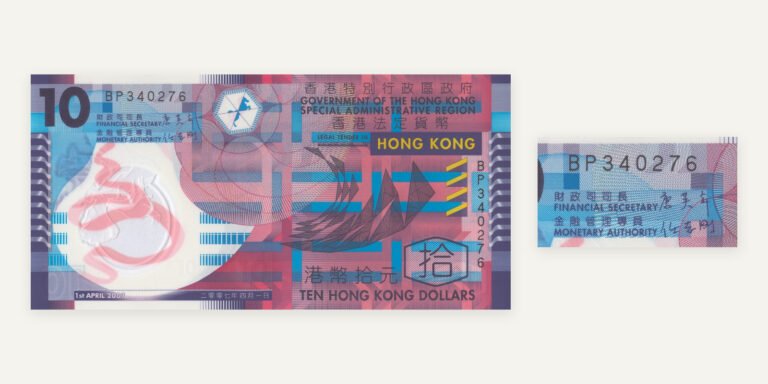
Missing serial numbers and extra printing can have different causes. Four published examinations show what comparison areas, surviving features and close-ups can reveal.
Authenticating a banknote is one of the most important skills a collector can develop. Genuine banknotes contain carefully engineered security features designed to protect currency from counterfeiting. From watermarks and security threads to microprinting, holographic elements, and ultraviolet markings, each feature reflects the technological sophistication of modern banknote printing.
Understanding these elements allows collectors to distinguish authentic banknotes from reproductions, fantasy issues, or altered pieces. Careful observation of printing quality, paper or polymer material, and integrated security details helps reveal whether a note was produced by an official issuing authority or outside the monetary system.
This section explores the methods and tools used to verify banknote authenticity. Through practical examples and explanations of common security features, collectors can develop the confidence needed to evaluate banknotes accurately and preserve the integrity of their collections.
Missing serial numbers and extra printing can have different causes. Four published examinations show what comparison areas, surviving features and close-ups can reveal.
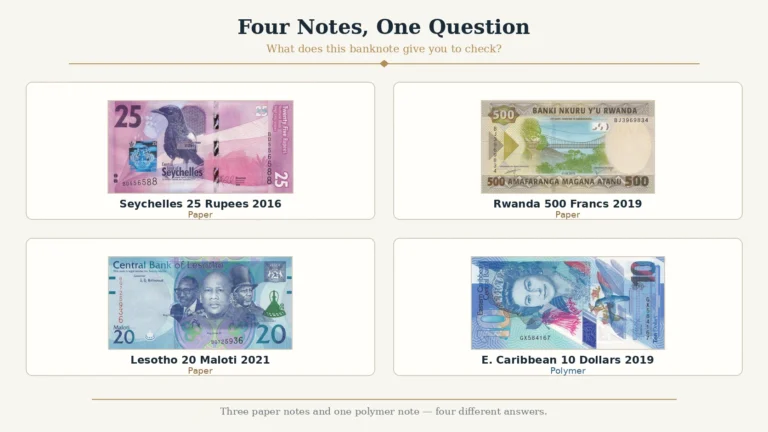
Transmitted light reveals security features that ordinary reflected-light viewing can easily conceal from collectors. Learn how watermarks, registration devices, threads and polymer windows should appear.
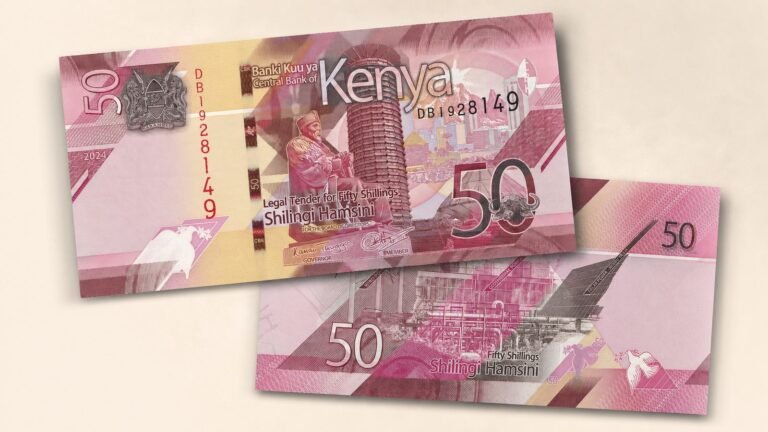
Security features work together as a system, not as isolated effects on a checklist. Learn how substrates, watermarks, threads, inks and optical devices authenticate issues.

Authentication asks whether a banknote genuinely matches the exact issue it claims to represent. Follow a practical method combining identification, materials, printing and security features.