
Sudan and South Sudan, 2011: When One Currency Became Two

South Sudan introduced its own pound in 2011 while Sudan replaced its banknote designs. Original scans and a contemporary UN report show the different routes, the…
Banknote collecting is not only about owning beautiful pieces of currency — it is also about understanding the history, symbolism, and monetary systems behind them. Each banknote carries information about the issuing country, its economy, cultural identity, and the historical period in which the note was created.
Developing knowledge about banknotes allows collectors to better interpret designs, recognize important series, and understand how different currencies evolved over time. From the meaning of national symbols to the stories behind portraits and landmarks, deeper knowledge transforms a simple banknote into a historical document.
This section brings together educational resources designed to expand collectors’ understanding of world banknotes. By exploring historical context, terminology, and collecting concepts, readers can build the knowledge needed to navigate the world of banknote collecting with confidence.
South Sudan introduced its own pound in 2011 while Sudan replaced its banknote designs. Original scans and a contemporary UN report show the different routes, the…

Three German loan-office notes carry the Reich Debt Administration’s name and no promise to pay. Original scans and the 1914 law reveal the secured loans behind…
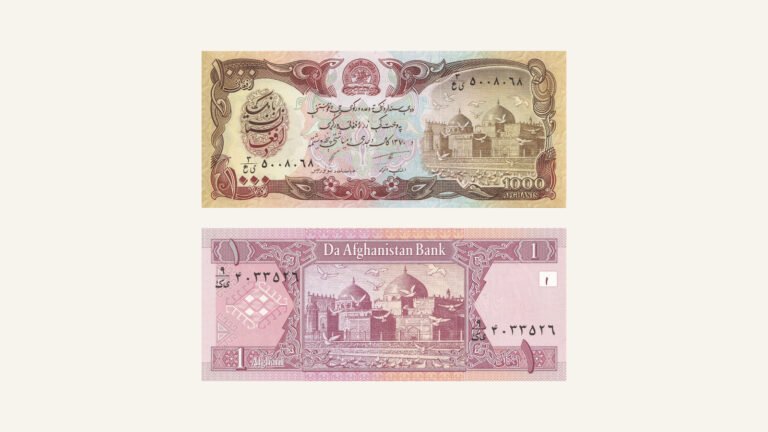
Afghanistan’s 2002–2003 currency change required almost 800 million new banknotes to be ordered and billions of old notes to be handled. Original specimens and the IMF’s…
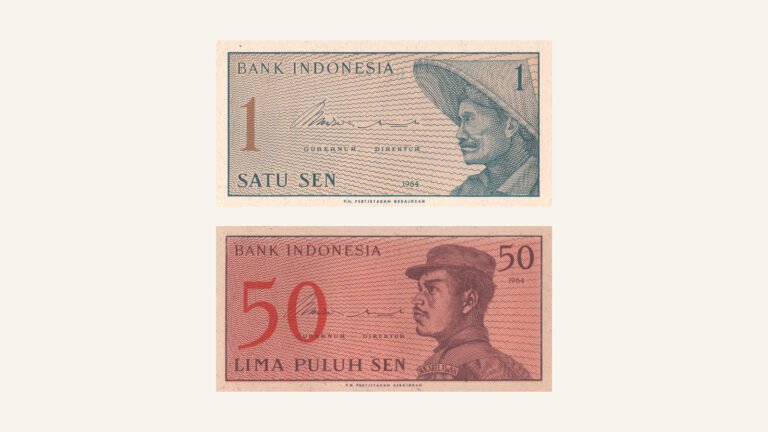
Five sen notes carry 1964 and the name Bank Indonesia. Original scans show their shared design, volunteer inscriptions and reverse numbering alongside the catalogue and documentary…
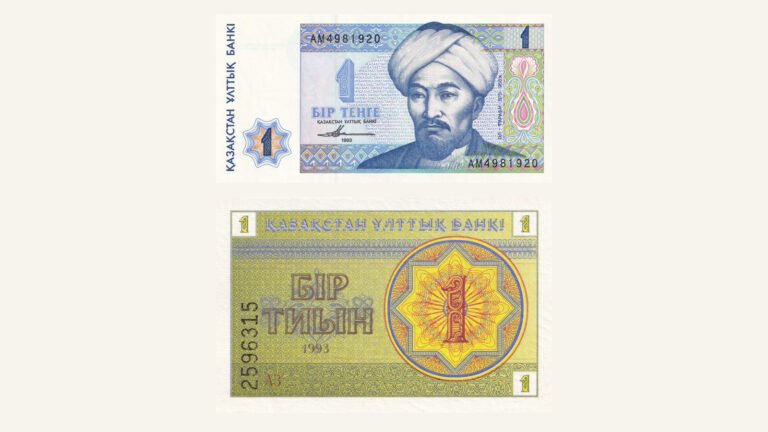
Kazakhstan’s first currency used paper for both tenge and tiyn. Original notes show how the 1993 date persisted across different denominations and catalogued printing groups.
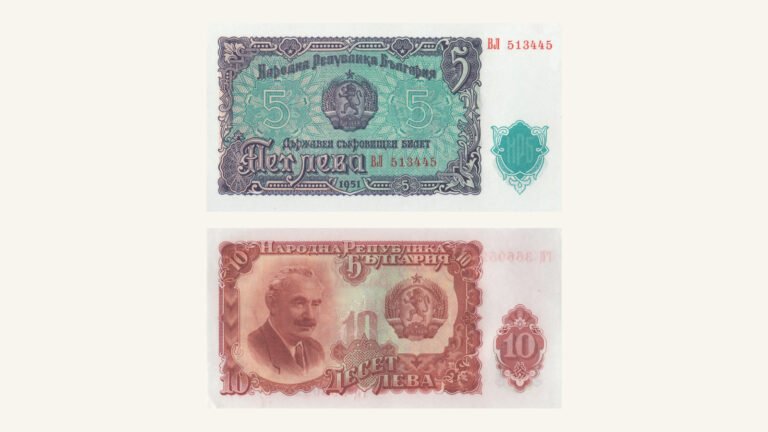
Bulgaria’s 1951 issue contained state treasury notes and BNB banknotes. Original scans and the Bank’s records reveal two backing clauses, separate accounting and the limits of…

A two-million-karbovantsiv certificate and a 1995 NBU coupon share a monetary unit but served different purposes. Original scans and legal texts explain the compensation conditions and…
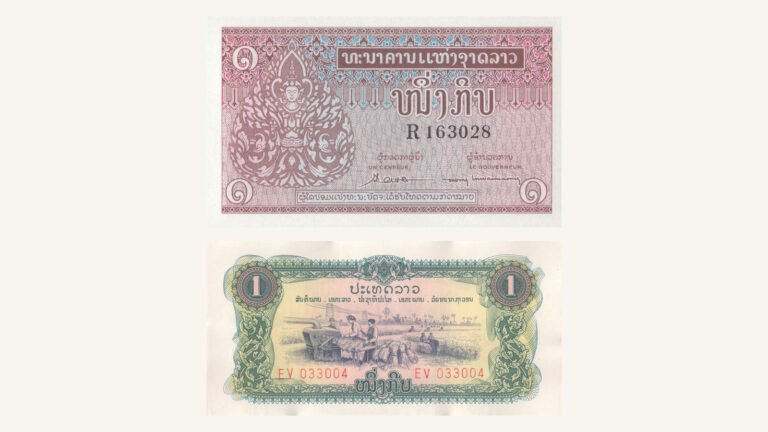
Two undated one-kip notes belong to different issues. Their inscriptions and a World Bank account explain how an existing zone currency replaced the Vientiane kip in…

Three Japanese occupation notes name the same government but use dollars, cents and centavos. Original scans and a 1941 policy document explain the local currency units,…
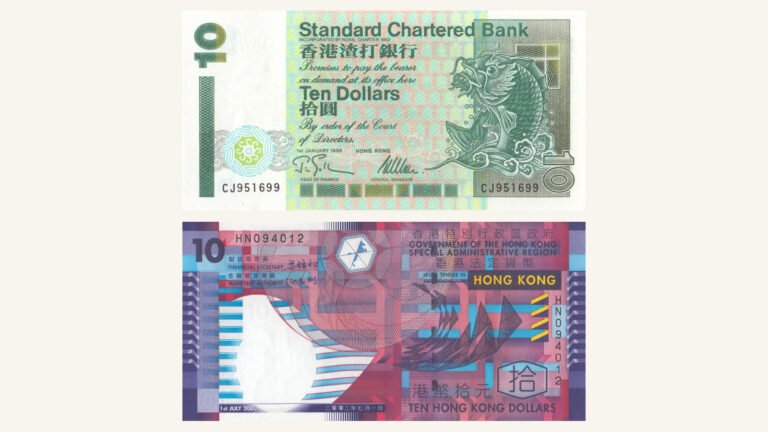
Hong Kong introduced a ten-dollar coin in 1994, yet issued a new government banknote in 2002. A Standard Chartered ten and its government counterpart reveal the…