Collector Guide to Banknote Collecting
Expert guides on collecting, identifying, storing and understanding world banknotes.
Banknotes combine history, art, and advanced security printing. For collectors, understanding these elements reveals how nations express their identity through currency.
Whether you are taking your first steps or deepening an existing collection, this guide brings together essential knowledge about history, design, authenticity, and preservation of world banknotes.
Getting Started
Essential guides for beginners starting their journey into world banknote collecting.
-
How to Compare Banknote Prices: Reading Auction Results
One banknote can appear at two different prices in auction archives. Learn how fees, lot contents, condition and repeat appearances change what a result tells you.
-
What Is a Banknote?
Not every printed note becomes money, and a former currency can remain a banknote. Build a practical definition for collecting and cataloguing.
-
How to Start a Banknote Collection
Build a strong collection around a clear theme, budget, condition standard and storage plan. Learn where to buy and which beginner mistakes to avoid.
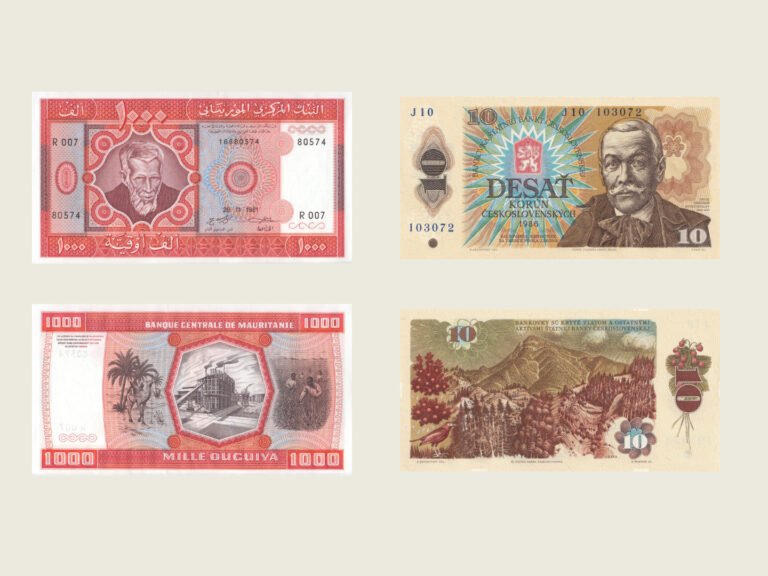

Identification & Cataloguing
Learn how to read and identify banknotes. These guides explain the key elements that appear on banknotes — including issuing authorities, denominations, series, signatures, and catalog numbers used by collectors worldwide.
-
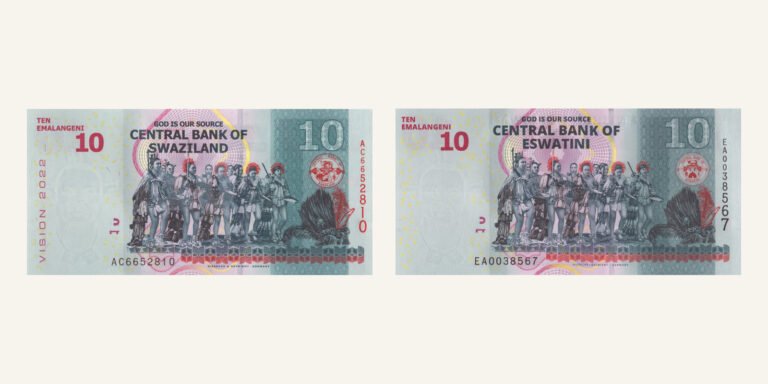
When a Country Changes Its Name: What Changes on Its Banknotes?
A new country name does not necessarily bring a new currency, an immediate change of bank title or the withdrawal of old notes. Four documented cases…
-
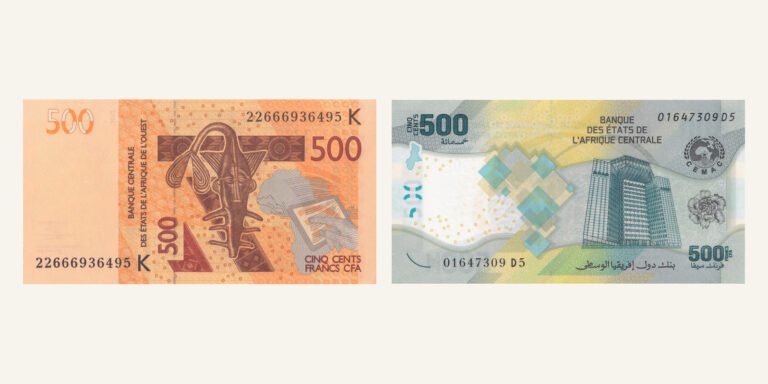
One Currency or Two? Reading Banknotes Across Borders
Two notes can share a currency name and an exchange rate without belonging to the same currency. CFA francs and Brunei–Singapore dollars reveal three different relationships…
-
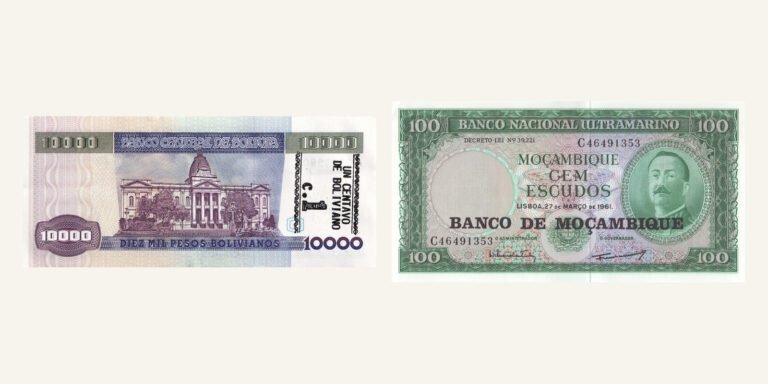
Banknote Overprints: What Changed—and What Didn’t?
An overprint can add a new denomination or a new bank name without replacing the older design. Three documented cases show how to read the layers—and…
-
When Two Banknotes Share a Picture: What Is Actually the Same?
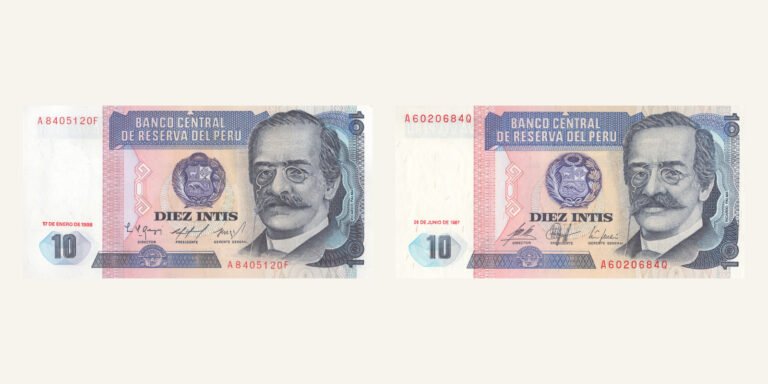
Two banknotes can share a portrait without sharing an engraving. Compare original Peru scans and documented design histories to see what visual resemblance can—and cannot—establish.
-
Specimen Banknotes: Who Were They Made For?
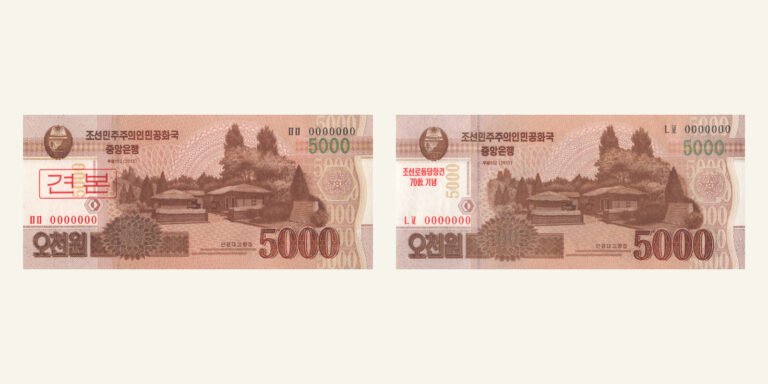
A specimen marking does not reveal the intended recipient. Compare institutional albums, collector subscription sets and North Korean notes whose original purpose remains undocumented.
-
What Can a Banknote’s Serial Number Actually Tell You?
A banknote’s number may identify a year, bank or printer. Five documented systems show why the issue—and sometimes the number’s colour—must be recorded too.
-
How to Identify a Replacement Banknote: Star Notes, Special Prefixes and False Positives
Replacement notes require evidence because no letter or prefix acts as a universal marker. Learn how star notes, special prefixes and false positives differ across issuers.
-
What Does a Signature on a Banknote Actually Mean?
Signatures distinguish varieties and periods but rarely prove an exact date of printing alone. Learn what banknote signatures attest and where interpretation exceeds the evidence.
-
Who Issues Banknotes? Central Banks, Currency Boards and Multiple Issuers Explained
The largest name on a banknote does not always identify its legally responsible issuer. Compare central banks, treasuries, currency boards and multi-issuer systems.
-
Commemorative Banknotes Explained: How to Identify and Collect Special Issues
Commemorative status depends on purpose and official evidence rather than a banknote’s appearance alone. Learn how circulation, collector and promotional issues differ.
-
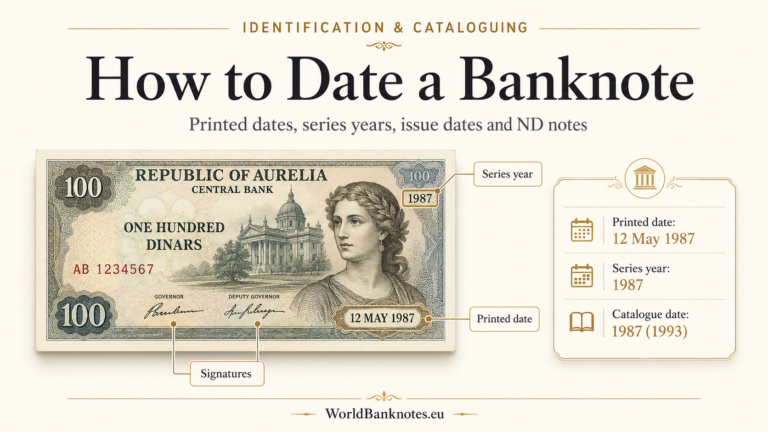
How to Date a Banknote: Printed Dates, Series Years, Issue Dates and ND Notes
A printed year may mark design, authorisation or series rather than the production date. Separate printed dates, issue dates, signatures, prefixes and catalogue conventions.
-
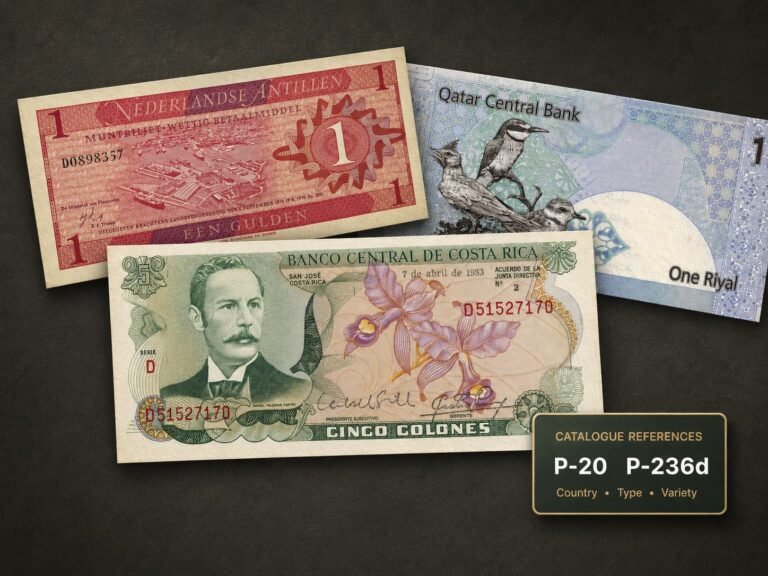
What Is a Pick Number? How to Read Banknote Catalogue References
Pick numbers identify catalogue entries, not individual banknotes or universal chronological order between countries. See how prefixes, suffixes, varieties and revisions complete each reference.
-
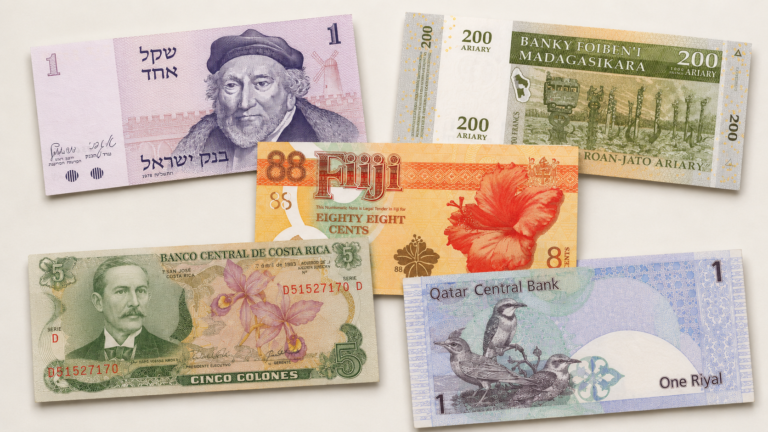
How to Identify a Banknote
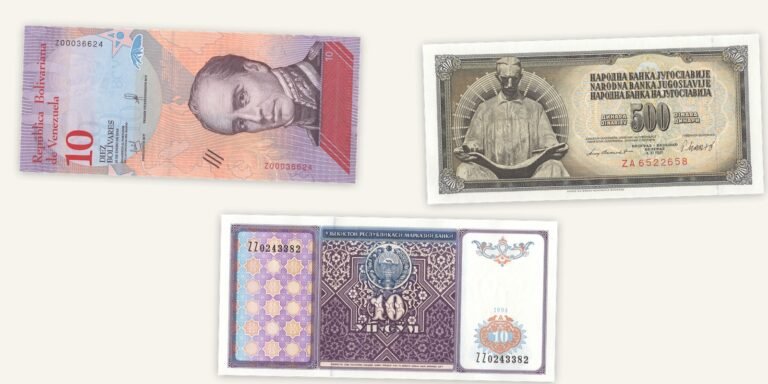
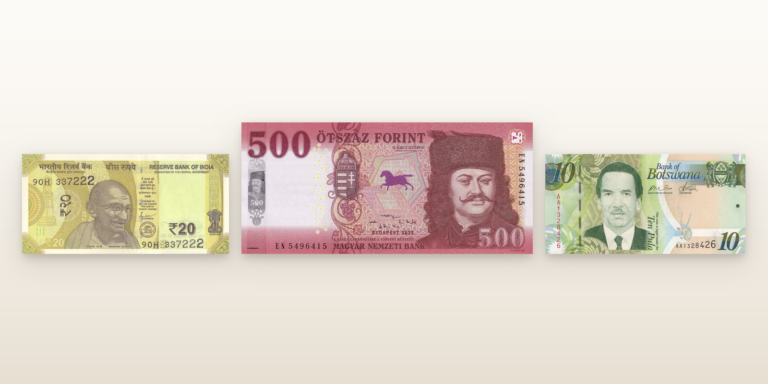
Identify an unfamiliar banknote by moving systematically from broad evidence toward narrow distinguishing details. Then confirm the issuer, denomination, date, signatures, serial number and printer.

Authentication & Security
Understand how to recognize authentic banknotes and detect potential counterfeits. These guides explore security features such as watermarks, security threads, microprinting, and other techniques used to protect paper money.
-
Banknote Printing Error or Alteration? Four Documented Cases
Missing serial numbers and extra printing can have different causes. Four published examinations show what comparison areas, surviving features and close-ups can reveal.
-
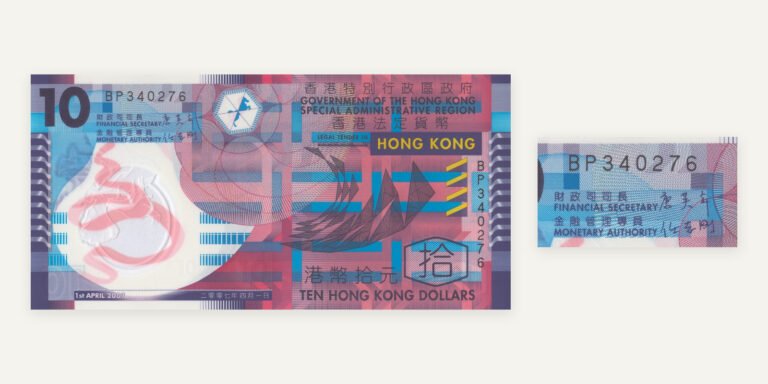
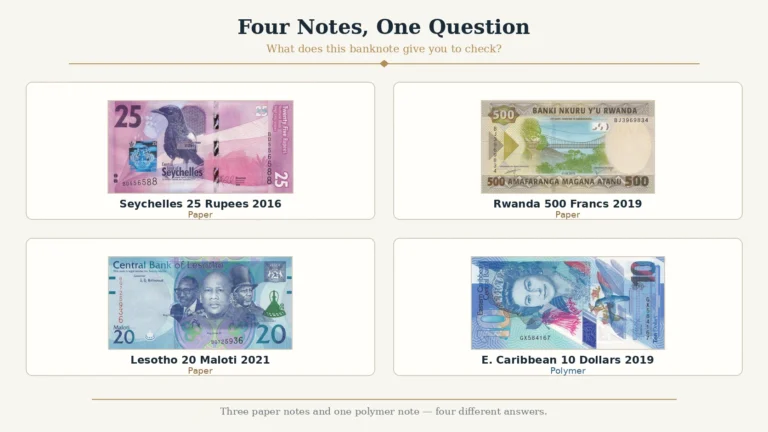
How Do You Check a Banknote Against the Light? Watermarks, Registration Devices, Threads and Windows Explained
Transmitted light reveals security features that ordinary reflected-light viewing can easily conceal from collectors. Learn how watermarks, registration devices, threads and polymer windows should appear.
-
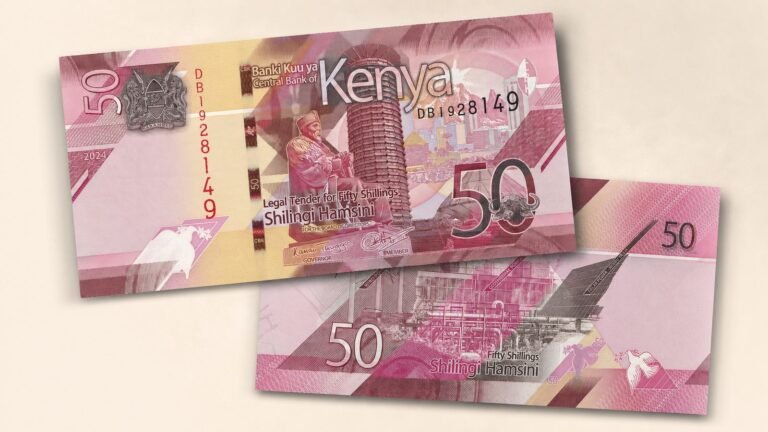
Banknote Security Features Explained: A Collector’s Guide
Security features work together as a system, not as isolated effects on a checklist. Learn how substrates, watermarks, threads, inks and optical devices authenticate issues.
-
How to Authenticate a Banknote: A Practical Collector’s Method
Authentication asks whether a banknote genuinely matches the exact issue it claims to represent. Follow a practical method combining identification, materials, printing and security features.

Printing & Technology
Discover how banknotes are designed and printed. Learn about engraving, intaglio printing, modern polymer technology, and the sophisticated processes used by banknote printers around the world.
-
Can You Photograph, Scan or Reproduce a Banknote?
Banknote image rules vary by issuer. Compare official conditions for size, colour, resolution, SPECIMEN markings, attribution and permission in eight systems.
-
When Does a Banknote Enter Circulation?
A banknote can move through vaults and accounting systems without ever reaching the public. Compare when seven monetary systems consider it to be in circulation.
-
When Is a Banknote Too Worn to Circulate? Fitness, Sorting and Destruction
A genuine banknote can become too worn to remain in circulation despite retaining value. Compare fitness standards, lifespan estimates, sorting practices and destruction data.
-
How New Banknotes Replace Old Ones: Inside a Series Changeover
New banknote series first reach the public through carefully planned and coordinated changeover operations. Compare phased releases, machine preparation, communication, overlapping circulation and old-note returns.
-
How Many Were Printed? What Banknote Print Runs Really Measure
Published quantities may describe orders, production, deliveries, issuance, circulation or several entirely different measures. Learn why the figures answer different questions and are not interchangeable.
-
How Is a Banknote Created? From Institutional Decision to Approved Design
A banknote begins with institutional decisions long before any final artwork receives official approval. Follow design briefs, consultation, testing and approval through ten documented programmes.
-
Who Prints the World’s Banknotes? A Collector’s Guide
The most prominent banknote name usually identifies the issuer rather than the printing company. Learn how national works and commercial specialists divide production.
-
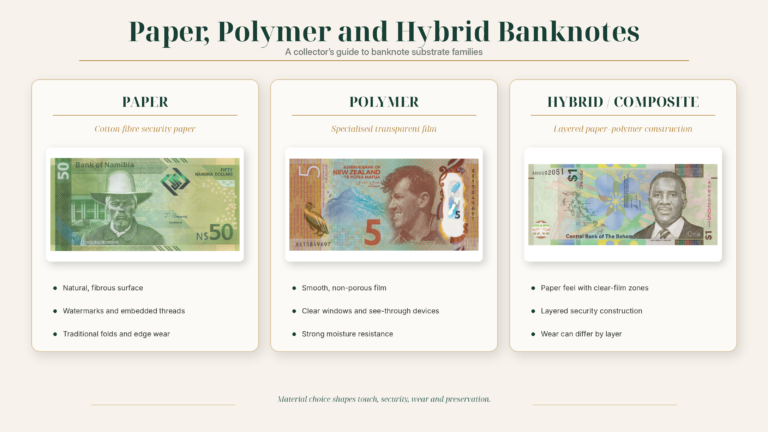
Paper, Polymer and Hybrid Banknotes: Materials, Security and Collecting
Paper, polymer and hybrid banknotes differ materially beneath their visible printed designs and finishes. Compare their structures, durability claims and practical consequences for collectors.
-
How Banknotes Are Printed
Banknotes are printed in layers because no single production process can accomplish everything required. Follow substrate preparation, offset, intaglio, numbering, inspection and finishing.


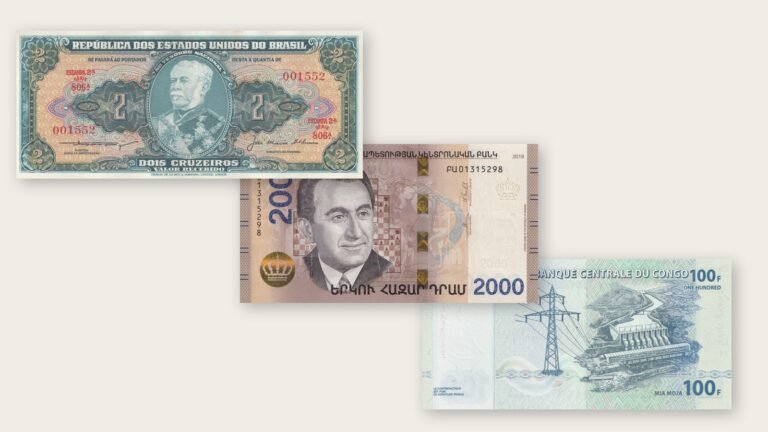

Grading & Preservation
Learn how to protect and store banknotes properly. These guides explain safe handling, storage materials, and the best practices collectors use to preserve banknotes for the long term.
-
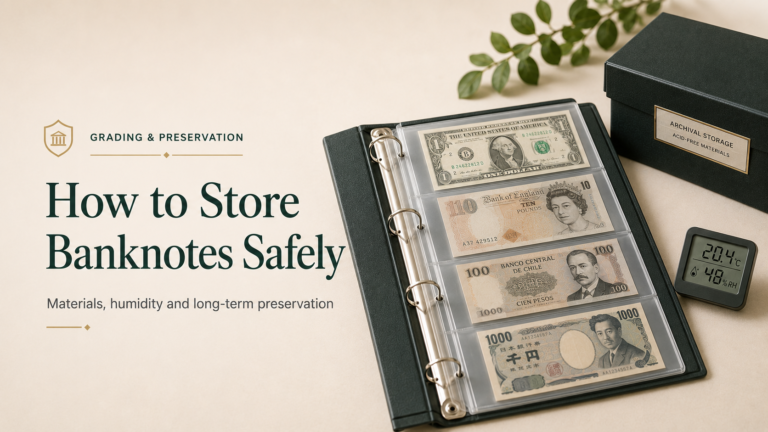
How to Store Banknotes Safely: Materials, Humidity and Long-Term Preservation
Safe storage protects the complete banknote object, not only its immediately visible printed design. Learn how sleeves, humidity, light, heat and handling affect preservation.
-
Banknote Grading Explained: UNC, aUNC, EF, VF and Other Grades
Banknote grades describe physical condition alone, not rarity, market value, authenticity or historical importance. Learn how folds, handling and damage separate common condition levels.

History, Design & Culture
Explore the broader world of banknote collecting. These articles cover the history of paper money, famous banknote designs, cultural symbolism, and the global stories hidden within banknotes.
-
Languages on Banknotes: What Gets Translated?
A bilingual note can carry a third language in its coat of arms. Five currency systems show how bank names, values, mottos and initials follow different…
-
Foreign Exchange Certificates: Who Could Use Them?
A certificate’s title does not tell you who could use it. Chinese rules, IMF reports and Cuban examples separate eligibility, compulsory exchange, payment and redemption.
-
How Do Blind and Partially Sighted People Identify Banknotes?
Banknote accessibility involves size, contrast, tactile codes and external aids. Explore what official guidance and historical research reveal about identification, wear and everyday use.
-
Why Do Banknotes Have Different Denominations? How Issuers Choose Their Values
Currency values reflect payment habits, inflation, production costs and practical constraints within each system. See why issuers add, retain, transfer or stop issuing particular denominations.
-
How Banknotes Became Money: A History of Trust and Issuing Authority
Banknotes became trusted money as institutions, promises, laws and systems of authority evolved worldwide. Trace their development from paper claims to modern national currencies.
-
Banknotes That Never Became Money: Why Some Notes Were Printed but Never Issued
A banknote can be fully printed, numbered and signed yet never officially become money. Explore non-issue from entire types down to serial-number blocks.
-
When a Banknote Stops Being Legal Tender: What Withdrawal Actually Means
Withdrawal, legal-tender status and redemption are separate events with different practical consequences for holders. Compare how issuers change a banknote’s status and treat notes still held.
-
Hyperinflation Banknotes: Three Collapses, Documented
Enormous printed values do not prove hyperinflation without a dated monetary context around them. Three documented collapses show why dates, units and redenomination rules matter.
-
What Happens When a Country Changes Its Currency?
Currency reform can change units, conversion rates and legal status without physically altering banknotes. Learn how redenomination differs from withdrawal, replacement and demonetisation.
-
Understanding Banknote Design and Symbolism
Banknote design must resist forgery while communicating national identity through carefully chosen visual language. Explore how portraits, landscapes, architecture, colour and symbols serve both purposes.