
How Banknotes Are Printed
A banknote may appear simple at first glance. It looks like a printed piece of paper carrying numbers, portraits, and symbols. In reality, every banknote is the result of one of the most complex currency printing processes in the world.

“A banknote is more than a means of payment — it is a nation’s story printed on paper.” — Audrius, Founder & Curator of WorldBanknotes.eu
Unlike ordinary printed materials, banknotes must achieve two goals at once. They must express a nation’s identity through design while remaining extremely difficult to counterfeit.
To accomplish this, banknotes are produced using several specialized printing techniques layered in a precise sequence. These techniques combine traditional engraving methods with modern security technologies.
For collectors, understanding how banknotes are printed reveals much more than a manufacturing process. It explains the textures, fine details, and subtle characteristics that distinguish genuine banknotes from imitations.
Learning how paper money is made also helps collectors better appreciate the craftsmanship behind every note they hold.
Table of Contents
Why Banknotes Require Specialized Printing
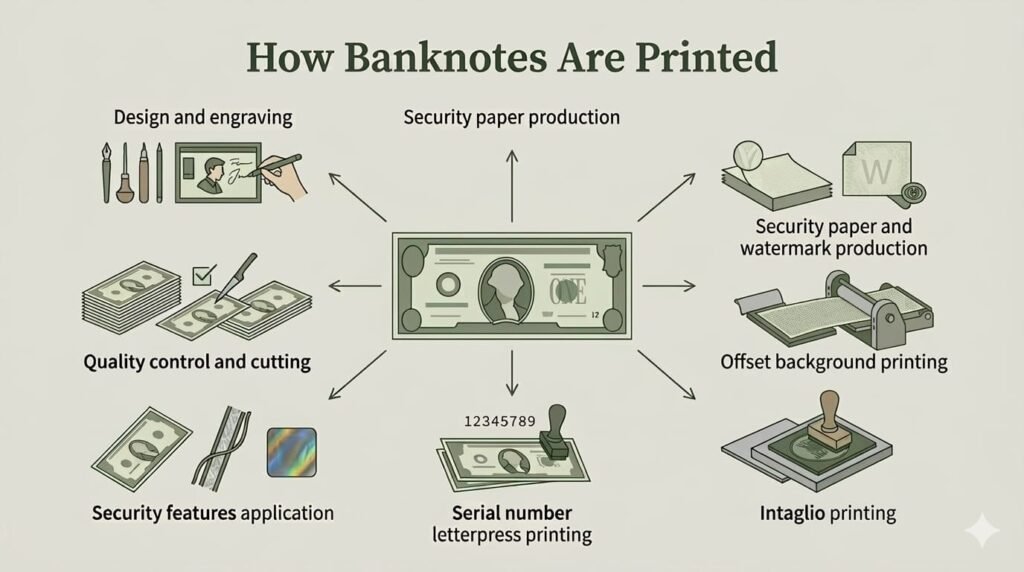
Printing a banknote is very different from printing a book, magazine, or poster. Ordinary printing methods cannot provide the level of security and precision required for modern currency.
Banknotes must remain durable enough to circulate for years while maintaining clear design elements and reliable security features. At the same time, they must contain visual and tactile characteristics that allow both machines and humans to verify authenticity.
To achieve this balance, banknotes are produced using several advanced printing methods that create distinctive textures, extremely fine lines, and multiple layers of security.
Many modern banknotes are printed using a combination of different techniques. Each technique contributes a specific visual or physical characteristic that helps protect the note and define its design.
The Main Printing Techniques Used in Banknotes
Intaglio Printing

Intaglio printing is the most recognizable banknote printing technique and has been used in currency production for centuries.
In this method, artists engrave extremely fine lines into metal plates. Ink is then forced into the engraved lines, and the plate is pressed onto the paper using very high pressure.
This process creates a slightly raised layer of ink on the surface of the banknote. Portraits, national emblems, and large denomination numbers are often printed using this method.
Collectors often recognize intaglio printing by touch. When running a finger gently across the surface of a banknote, the raised texture of the ink can usually be felt.
Because of its precision and tactile qualities, intaglio printing remains one of the most difficult techniques for counterfeiters to reproduce.
Offset Lithography
Offset printing is commonly used to create the colorful background designs of banknotes.
This technique produces smooth areas of color, subtle shading, and complex decorative patterns known as guilloches. Unlike intaglio printing, offset ink lies flat on the surface of the paper.
Although offset printing does not produce raised textures, it allows designers to create intricate visual layers that support the main engraved elements of the banknote.
These backgrounds often contain extremely detailed patterns that help make counterfeiting more difficult.
Letterpress Printing
Letterpress printing is typically used to apply serial numbers and certain control marks to banknotes.
In this process, ink is transferred from raised characters onto the paper. The result is a sharply defined print that may feel slightly raised.
Serial numbers give every banknote a unique identity. They allow central banks to track production batches and monitor notes circulating within the monetary system.
For collectors, serial numbers can sometimes reveal interesting production details or unusual number combinations.
Screen Printing and Special Effects
Some modern banknotes use screen printing to apply specialized inks and security elements.

This technique allows thicker layers of ink to be deposited on the surface of the note. It is commonly used for color shifting inks, tactile marks for the visually impaired, and certain types of security patches.
These features create visual effects that change under different lighting conditions and add another layer of protection against counterfeiting.
The Banknote Printing Process Step by Step
Although the exact procedures vary between national printing authorities, the overall process of producing a banknote follows a carefully structured sequence.
The process begins with the design phase. Artists and security engineers collaborate to create the visual composition of the banknote, integrating portraits, national symbols, and security elements.
Once the design is finalized, engraving specialists prepare printing plates for the intaglio elements. These plates contain the extremely fine engraved lines that will form the detailed parts of the design.
The first printing stage typically applies the background colors using offset printing. This stage creates the base layer of the banknote.
The next stage introduces intaglio printing, which adds the main design features such as portraits, emblems, and denomination numbers. This step creates the distinctive raised texture found on many banknotes.
After the main design elements are printed, serial numbers and control codes are added using letterpress techniques.
Finally, additional security elements such as holographic patches, color shifting inks, or special coatings may be applied. Each sheet of banknotes is then carefully inspected before being cut into individual notes.
Only banknotes that pass strict quality control standards enter circulation.
Why These Techniques Make Counterfeiting Difficult
The combination of multiple printing methods creates layers of complexity that are extremely difficult to replicate.
Each printing technique requires specialized equipment, precise alignment, and carefully formulated inks. Even small differences in pressure, color, or line detail can reveal a counterfeit note.
Professional banknote printing facilities operate under strict security controls and use technologies that are not available to ordinary commercial printers.
For this reason, genuine banknotes contain a distinctive mix of textures, colors, and micro details that are extremely difficult to reproduce outside official printing works.
Collectors who learn to recognize these characteristics gain an important advantage when evaluating the authenticity of banknotes.
How Collectors Recognize Printing Methods
Experienced collectors often examine banknotes closely to identify the printing techniques used.
Raised textures usually indicate intaglio printing. Smooth background areas typically reveal offset printing. Sharp serial numbers often indicate letterpress printing.
By observing these characteristics, collectors can better understand how a banknote was produced and sometimes identify differences between various issues or print runs.
Studying printing techniques also helps collectors appreciate the craftsmanship behind banknote design and production.
Final Thoughts
Banknote printing represents a unique meeting point between traditional craftsmanship and modern technology.
The engraved lines of intaglio printing preserve techniques developed centuries ago, while modern security features incorporate advanced materials and optical technologies.
Understanding how banknotes are printed allows collectors to see beyond the surface of the note. What may appear to be a simple object reveals itself as the result of careful design, technical precision, and national symbolism.
Every printed layer contributes to the story a banknote carries.
Frequently Asked Questions
How are banknotes printed?
Banknotes are printed using specialized techniques such as intaglio printing, offset lithography, and letterpress printing. These methods are combined to create both the design and the security features of the note.
What is intaglio printing on banknotes?
Intaglio printing is an engraving technique that produces raised ink on the surface of the banknote. It is commonly used for portraits, national emblems, and denomination numbers.
Why are banknotes difficult to counterfeit?
Banknotes combine multiple printing techniques, complex security features, and specialized inks that require advanced equipment and expertise to reproduce.
Do all countries use the same banknote printing techniques?
Most modern banknotes use similar core printing methods, but the exact combination of techniques may vary depending on the country, design requirements, and security features.
About the author
Audrius is the founder and curator of WorldBanknotes.eu, a specialized catalog and marketplace dedicated to collectible banknotes from around the world. His work focuses on the design, symbolism, and historical context of world banknotes, helping collectors better understand the stories behind the notes they collect.
Explore World Banknotes by Country
The best way to understand banknote printing techniques is by studying real examples. Different countries use distinct combinations of engraving, color design, and security features to express their national identity through currency.
Explore the WorldBanknotes.eu catalog and discover banknotes from around the world. Each note reveals the craftsmanship behind the art of printing money.