
Series
A banknote series is a family of notes sharing one design programme or issue era, usually covering several denominations. Its denominations may be introduced, revised or withdrawn on different dates while remaining part of the same series.
A series is a family of banknotes that share one design programme. Denominations within a series may be introduced, revised or withdrawn on different dates. A series normally covers several denominations, and it usually spans several years and more than one signature combination.
It is the broadest working grouping a collector uses below the level of the country itself: not one note, and not one printing, but the whole design era those notes belong to.
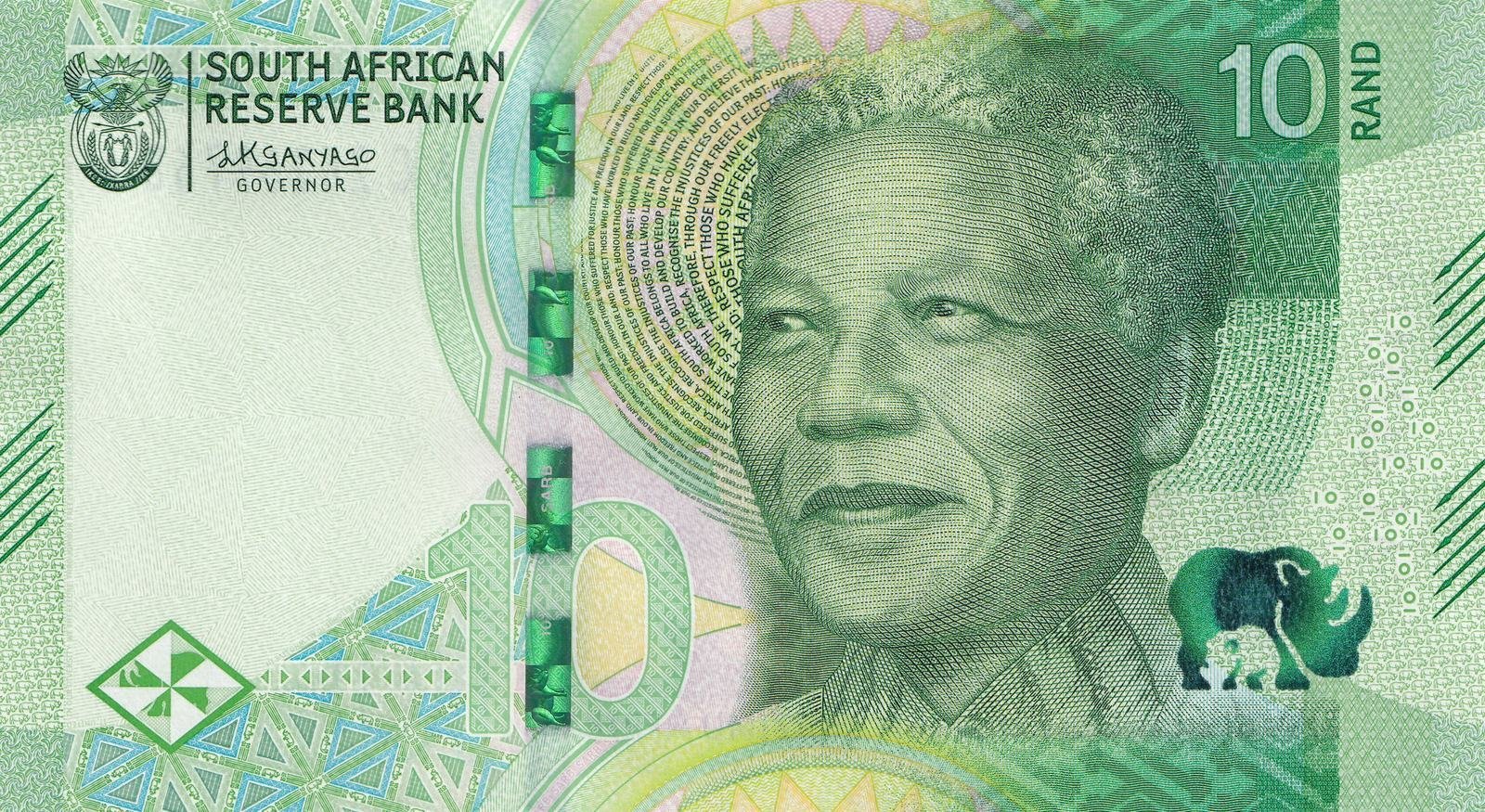
South Africa · 10 rand · P-148
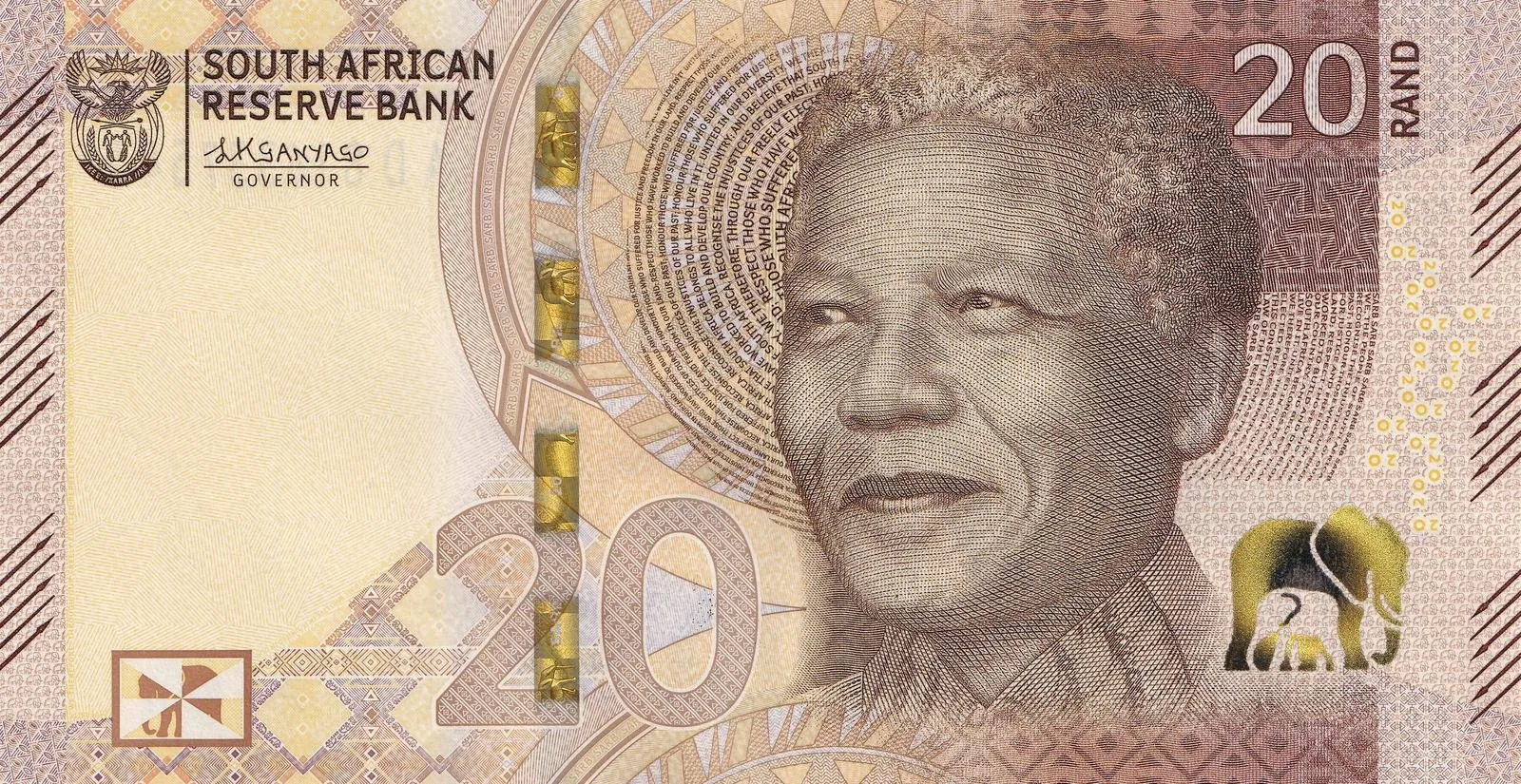
South Africa · 20 rand · P-149
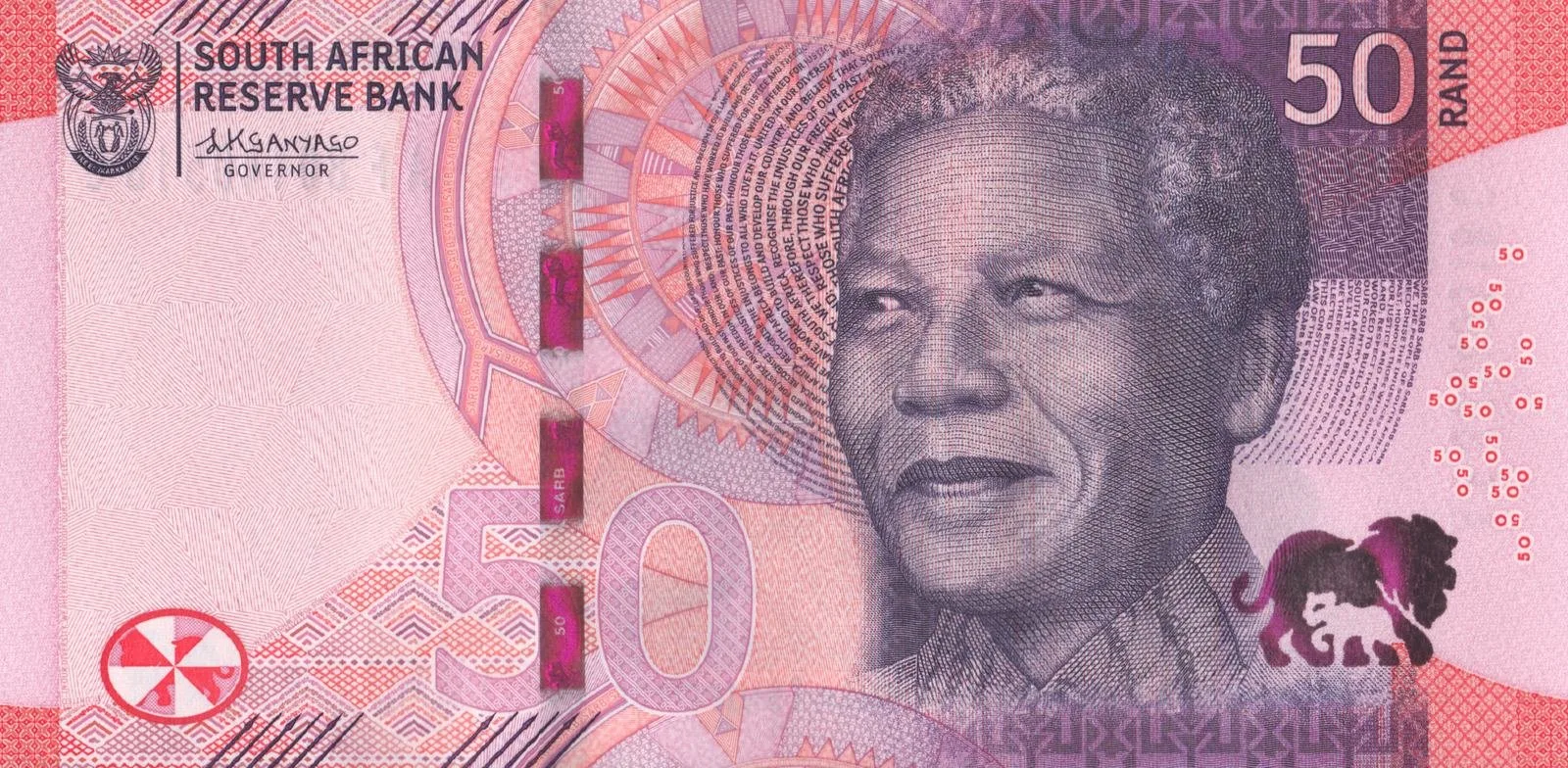
South Africa · 50 rand · P-150
How It Appears
A series is recognised by what its members have in common rather than by any single printed mark. The grouping used here is established by design and issue context; some national systems also print an explicit series designation.
The notes of one series typically share:
- a common design language: layout, ornament, typography and colour logic;
- a consistent thematic programme across the denominations;
- the same issuing authority and the same currency unit;
- a comparable generation of security features and substrate;
- a defined period of introduction and withdrawal.
What the notes of one series do not have to share is a date, a signature pair, a prefix or a printer. Those details can change during the life of a series.
The Afghanistan 1979–1993 Conflict Era Series illustrates the scale involved: six denominations from 10 to 10,000 afghanis, dated 1979 through 1993, and catalogued under Pick numbers carrying different variety letters. All of it is one series.
Functional Role
A series is an editorial and historical unit rather than a production one. It answers the question of which design programme a note belongs to, and therefore which other notes it sits alongside.
New series appear when something substantial changes: a currency reform, a change of political regime or issuing authority, a wholesale redesign, a move to a new substrate, or the retirement of an ageing design that can no longer be secured.
Within a series, production details can change. Officials may be replaced, serial-number prefixes may advance, a printing contract may pass to a different works, or a security feature may be upgraded. In the WorldBanknotes.eu grouping, none of these changes by itself establishes a new series; the wider design and issue context determines the boundary.
The WorldBanknotes.eu rule: a series is primarily a design and issue era. A change of signature, date, printer or serial-number prefix does not by itself create a new series, although it may define a separate issue or variety within one.
Series, Issue and Variety
The WorldBanknotes.eu grouping distinguishes three levels, because they answer three different questions. Other issuers and catalogues may use these terms differently.
| Level | What it groups | Question it answers |
|---|---|---|
| Series | A design programme, usually several denominations over several years | Which design era does this note belong to? |
| Issue | A particular release within that programme, or a standalone release such as a commemorative | Which release is this? |
| Variety | A difference within one release: signatures, date, prefix, printer, minor security change | Which version of that release am I holding? |
A single series therefore contains one or more issues, and an issue may contain several varieties. Reading upward works too: the variety letter in a catalogue reference such as P-58c identifies the version, the base number identifies the design, and the series is the design family that number belongs to.
One caution is worth knowing. The word is used differently in some national contexts: in United States paper money, the printed Series year can reflect either approval of a design or a change in the signatures appearing on the note, and it may be followed by a letter. That usage is much narrower than the one described here, and it is a common source of confusion when comparing catalogues. The definition on this page is the one used throughout WorldBanknotes.eu.
Why It Matters to Collectors
Series is the level at which a collection stops being a pile of notes and becomes a structure.
Collecting by series gives a defined target: every denomination of one design programme. That target has an end, which a country or a theme does not, and it produces a set where each note explains the others.
It also makes gaps visible. A series of six denominations with five in hand shows immediately what is missing, and where to look. This is the difference between collecting and accumulating.
Series boundaries carry history as well. They mark reforms, regime changes and monetary transitions, so a run of consecutive series is a record of a country’s monetary life rather than a list of designs.
Within a series, the finer work begins: identifying the issues and varieties, which is where catalogue references and close identification take over.
On WorldBanknotes.eu
Every banknote in the catalogue is assigned to a named series, written as a period followed by a description: 1979–1993 | Conflict Era Series, 1978–1984 | Sheqel Reform Series, 2020–2025 | Natural Heritage Series.
Country pages group the notes under these headings in chronological order, so a country reads as a sequence of design eras rather than an undifferentiated list. The period in the name is the life of the design programme, not the date of any single note within it.
Browse the catalogue by country to see how the series of a given country follow one another.
Related Terms
Frequently Asked Questions
What is a banknote series?
A family of banknotes sharing one design programme; its denominations need not be introduced or withdrawn together. A series usually covers several denominations and spans several years.
Does a change of signature create a new series?
Not by itself under WorldBanknotes.eu’s design-era grouping. A signature change may define a separate issue or variety within that grouping. Issuer terminology can differ: a change of signatures can produce a new printed Series designation on United States notes.
What is the difference between a series and an issue?
In WorldBanknotes.eu’s grouping, a series is the design and issue era, while an issue is a particular release within it or a standalone release. One series may contain several issues. Issuers and reference catalogues do not all use the same hierarchy.
Why do collectors care about series?
Because a series is a target with an end. Collecting every denomination of one design programme produces a complete, structured set, and makes any missing note immediately visible.