
Dominican Republic
Dominican Republic banknotes anchor identity in early statehood, where the peso links colonial architecture, independence figures, and national resistance.
2014–2024 | Modified Peso Series
Design & Visual Identity
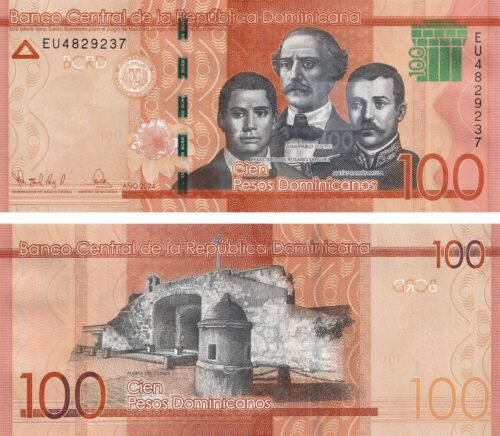
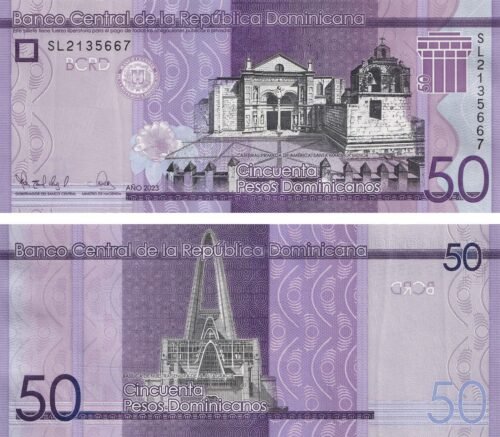
The modern series is anchored by some of the strongest historical landmarks in Caribbean currency design. The 50 pesos note features the Cathedral of Santa María la Menor in Santo Domingo, recognized as the first cathedral in the New World, while the 100 pesos note incorporates the Fortaleza Ozama, the oldest surviving European-built military fortress in the Americas. These structures give Dominican banknotes a clear architectural identity rooted in verifiable “first in the Americas” heritage rather than generic colonial reference.
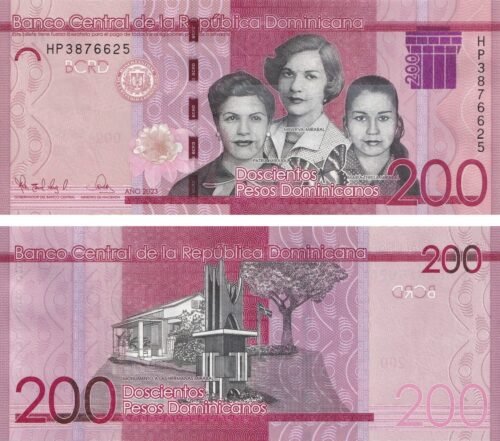
Higher denominations expand the national narrative through political memory and resistance. The 200 pesos note is tied to the Mirabal Sisters, known as Las Mariposas, whose martyrdom under dictatorship made them enduring symbols of anti-authoritarian struggle. The independence framework remains central through the founding fathers—Juan Pablo Duarte, Francisco del Rosario Sánchez, and Ramón Matías Mella—and through sites such as Puerta del Conde, where the republic’s historical memory is materially anchored. Traditional security features including watermark portraits, embedded threads, and fine guilloché structures support the series without overwhelming its historical emphasis.
Historical & Cultural Context
Dominican banknote history is marked by a visible shift between political eras. Earlier Peso Oro issues associated with the Trujillo period prominently featured Rafael Trujillo, reflecting a rigid phase of centralized authority in which currency served as an instrument of personal power and state control.
Later republican issues replaced this framework with constitutional and civic symbolism, redirecting the focus toward independence, public institutions, and national martyrs. This transition gives the Dominican Peso a clear chronological break, allowing the series to be read as a direct record of political reorientation.
For Collectors
For collectors, Dominican Republic offers a sharply defined field built on architectural firsts, anti-dictatorial memory, and clear historical segmentation. The Cathedral of Santa María la Menor 50 pesos, the Fortaleza Ozama oldest fortress type, the Mirabal sisters banknotes, and the earlier Trujillo Peso Oro issues form a coherent collecting pathway that combines colonial heritage, republican symbolism, and authoritarian-era rarity within one of the most historically legible currency traditions in the Caribbean.
Quick Facts
Currency: Dominican Peso