National Bank of Ethiopia
The National Bank of Ethiopia (ብሔራዊ ባንክ ኢትዮጵያ) operates as the central monetary authority overseeing a system shaped by regime shifts, notably reflected in evolving banknote series and state-driven monetary policy.
Quick Facts
Institutional Identity
The National Bank of Ethiopia, established in 1963, is responsible for issuing the Ethiopian birr (ETB), managing monetary policy, supervising financial institutions and safeguarding payment systems. It operates within a controlled domestic framework, reflecting Ethiopia’s state-oriented economic structure and active management of inflation, liquidity and foreign exchange rather than adherence to an external peg.
Historical Evolution
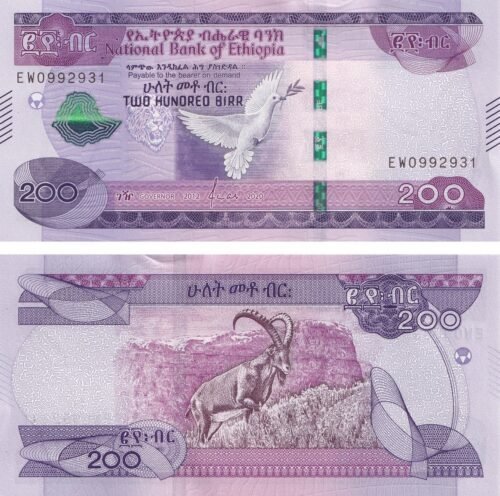
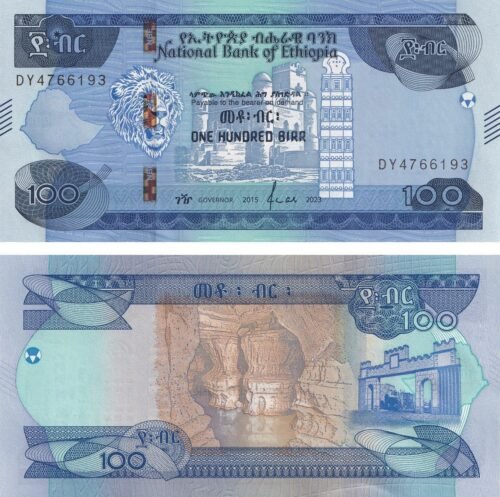
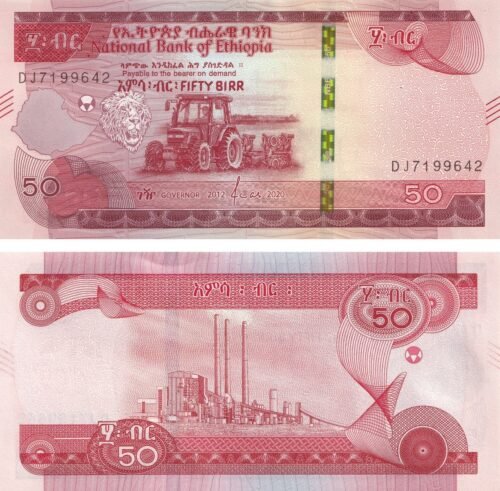
The Bank’s institutional trajectory mirrors Ethiopia’s political transformations, from imperial rule under Haile Selassie to the socialist Derg regime (post-1974) and the modern federal state. A defining visual and monetary shift followed the 1974 revolution, when the iconic Lion of Judah—a crowned imperial emblem—was removed or altered, replaced by socialist iconography. In 2020, the Bank executed a rapid nationwide demonetisation, replacing major denominations within months to curb illicit cash holdings, while introducing new designs and, for the first time, a 200 birr high-value note.
Design Philosophy
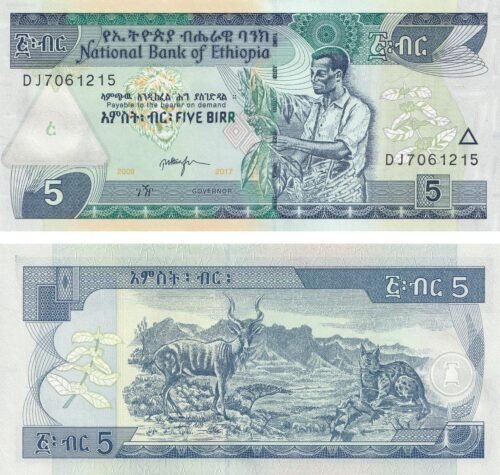
The Bank’s design governance reflects strong central direction, using banknotes to express national identity across changing regimes. Earlier issues, engraved by De La Rue, are noted for their refined British intaglio craftsmanship during the imperial period. Contemporary series integrate advanced security technologies, including colour-shifting elements such as Spark®/Motion® features, complex watermarks and modern security threads, ensuring durability and protection in a high-circulation environment.
For collectors
For collectors, the National Bank of Ethiopia offers a deeply stratified collecting field defined by the transition from imperial symbolism to socialist ideology and modern reform, with the Lion of Judah transformation, the 2020 demonetisation and the introduction of the 200 birr note forming key milestones in African numismatics.