
Iceland
Iceland banknotes tie each denomination to a specific figure and place, where the króna combines manuscript culture with clearly identified landscapes.
1981–1986 | Króna Reform Series
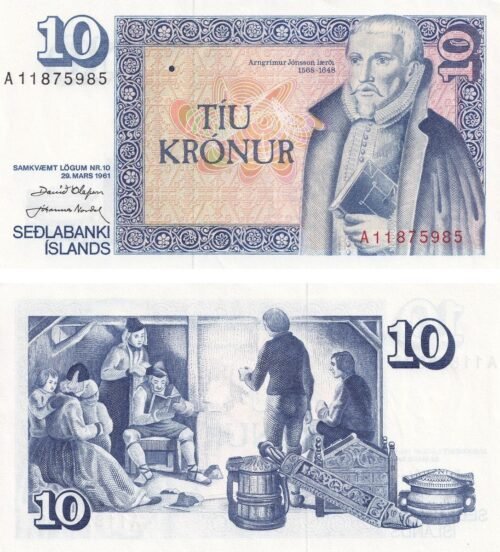
Design & Visual Identity
The 1,000 krónur note features Brynjólfur Sveinsson, Bishop of Skálholt, directly linked to the preservation of Icelandic saga manuscripts, with Skálholt Cathedral serving as the architectural anchor. The 500 krónur note depicts Jón Sigurðsson, leader of Iceland’s independence movement, paired with the Snæfellsjökull volcano, providing a clear geographic reference. The 2,000 krónur note presents painter Jóhannes Sveinsson Kjarval, with visual elements derived from lava field formations that define Iceland’s volcanic terrain.
The 5,000 krónur note features Ragnheiður Jónsdóttir, with a vertically oriented reverse dominated by detailed embroidery patterns based on historical textile work, creating one of the most distinctive fabric-inspired compositions in modern European banknotes. Across the series, manuscript fragments, calligraphic elements, watermark portraits, microtext, and fine guilloché structures function simultaneously as visual and security features.
Historical & Cultural Context
The structure of Iceland’s banknotes is built on literature, craftsmanship, and landscape representation rather than political or institutional themes. Brynjólfur Sveinsson establishes a direct connection to medieval manuscript preservation, while Skálholt Cathedral anchors ecclesiastical history. Kjarval introduces a modern artistic interpretation of volcanic terrain, and the embroidery patterns on the 5,000 krónur note translate domestic craft traditions into banknote design.
This results in a tightly defined system where each denomination acts as a documented reference point to Iceland’s written, artistic, and material culture, supported by precise visual anchors rather than abstract symbolism.
For Collectors
For collectors, Iceland offers a highly specialized field centered on Brynjólfur Sveinsson 1,000 krónur with Skálholt Cathedral, Jón Sigurðsson 500 krónur with Snæfellsjökull, Jóhannes Kjarval 2,000 krónur with lava field imagery, and the vertically structured 5,000 krónur note with embroidery design. Combined with small print runs tied to Iceland’s limited population and the integration of manuscript-based engraving, Icelandic króna banknotes are valued for their precision, texture, and strong literary and artistic anchors.
Quick Facts
Currency: Icelandic Króna
Issuer: Central Bank of Iceland