
Angola
Angola banknotes follow repeated cycles of reform, where successive kwanza issues replaced earlier versions and colonial Banco de Angola notes gave way to modern state-controlled printing.
1991 | First Kwanza Reform Series

2012–2017 | Waterfalls Series
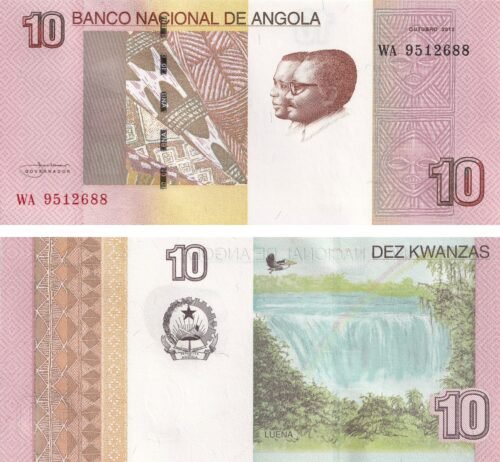
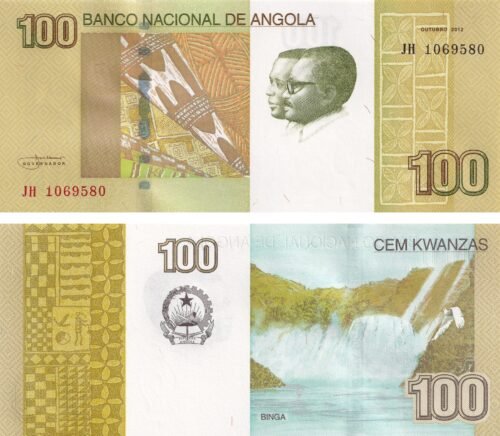
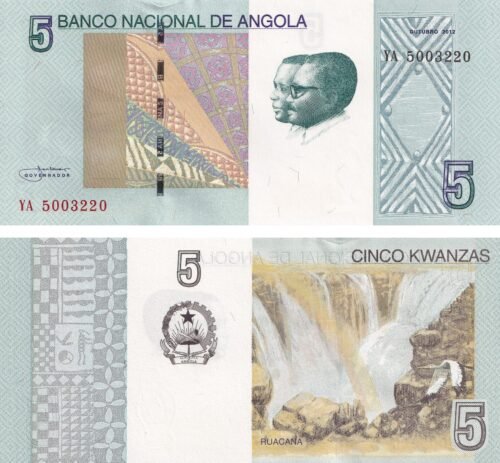
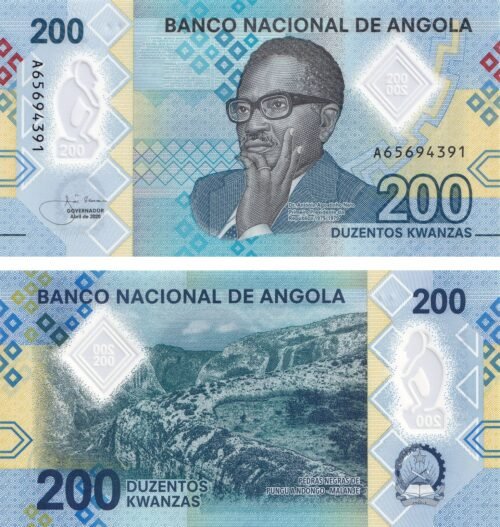
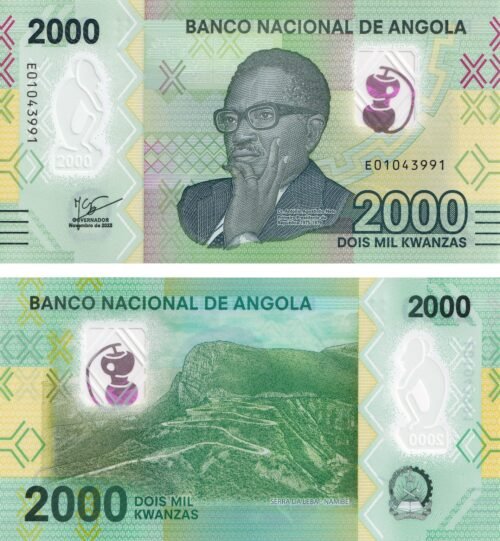
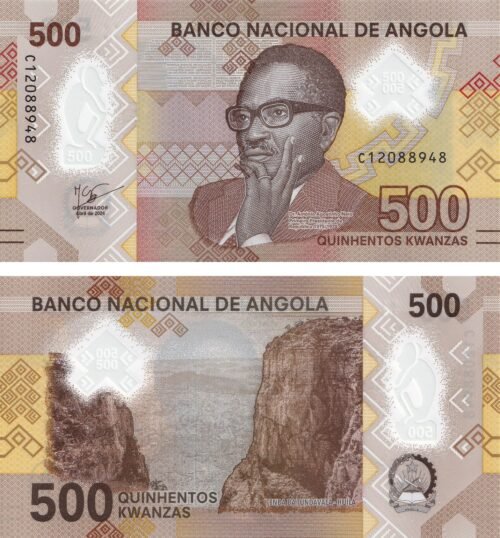
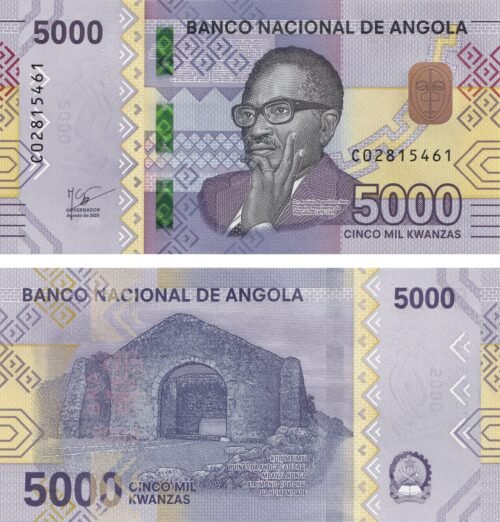
2020–2025 | Natural Heritage Series
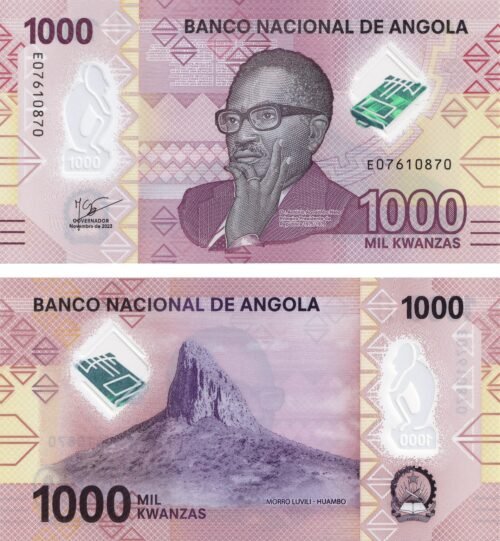
Design & Visual Identity
Angolan banknote design is built around portraiture and landscape motifs, with Agostinho Neto and José Eduardo dos Santos forming a recurring dual-portrait structure across multiple series. These portraits establish political continuity, while natural landmarks such as Kalandula Falls introduce recognizable geographic anchors within the compositions.
Earlier issues reflect formal colonial engraving traditions, while post-independence series adopt more structured layouts with geometric ornamentation and controlled colour systems. Security features include watermarks, security threads, microtext, and intaglio printing, with later issues incorporating polymer substrates in selected denominations within the 2020 series.
Historical & Cultural Context
The Angolan Kwanza was introduced after independence in 1975, replacing colonial monetary systems and establishing a national currency. Its evolution has been marked by multiple reforms, including the Novo Kwanza and subsequent redenominations, each aimed at stabilizing the economy during periods of inflation and structural change.
These successive currency transitions create a layered monetary framework, where each series reflects a specific phase of Angola’s political and economic development. The 2020 family represents the latest stage, combining updated design with modern security features.
For Collectors
For collectors, Angola offers a structured collecting field defined by multiple Kwanza reforms, dual-portrait series featuring Neto and dos Santos, and clear distinctions between colonial and post-independence issues. Key points of interest include redenomination series, variations across Kwanza types, and modern notes with polymer substrates in selected denominations. These factors make Angolan banknotes relevant for collectors focused on post-colonial currency systems and reform-driven monetary histories.
Quick Facts
Currency: Angolan Kwanza
Issuer: National Bank of Angola