
Suffix
A suffix is the ending component of a banknote’s serial number. It may consist of letters, digits or a symbol, with its boundaries and meaning defined by the numbering system.
A suffix is defined by its position at the end of a banknote’s serial number, not by a universal character type or purpose. It may identify a numbering group, carry the numeric sequence or mark a special category of note.
Italy · 1,000 lire · P-114a · front
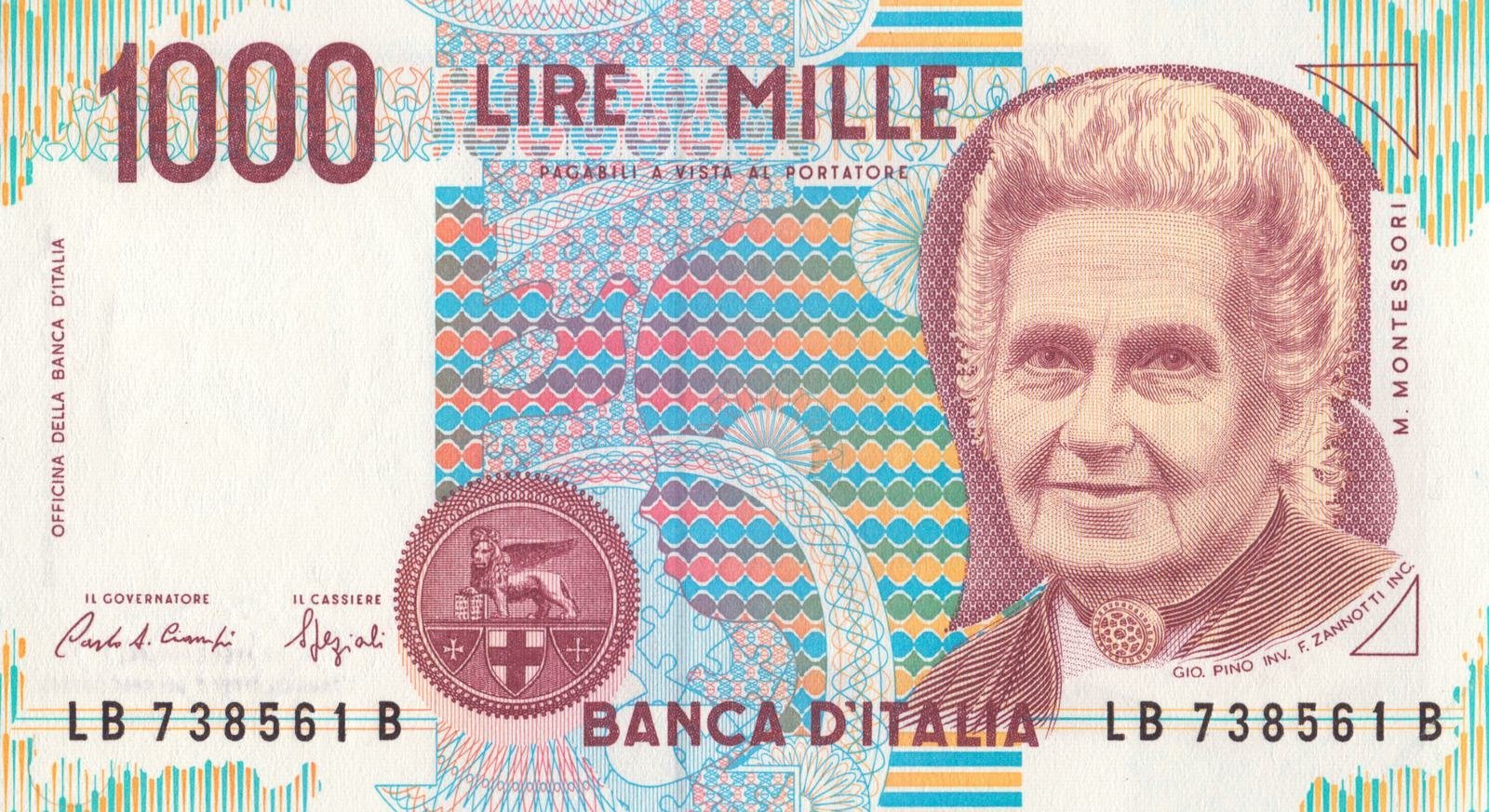
Final letter B within the complete serial
How It Appears
A suffix can be a letter, a group of letters, a sequence of digits or a symbol used in the ending position. Follow the issuer’s or specialist reference’s description of the complete format to establish where it begins.
For example, the US Bureau of Engraving and Printing describes the final letter of a Federal Reserve note’s serial number as a suffix. The Reserve Bank of Australia instead uses the term for the final six digits on the first polymer series and seven digits on the next-generation series.
A number ending in digits therefore does not necessarily lack a suffix. Equally, there is no reason to label an arbitrary final digit as a separate suffix if the reference for that issue does not divide the number that way.
Functional Role
The suffix works with the other components of the serial number. It may extend the available combinations, identify a numbering block or supply the sequence that changes as production proceeds.
A numeric suffix need not distinguish each note by itself. In Australia’s year-dated system, banknotes printed on the same sheet share a numeric suffix but have different prefixes. The complete combination must be considered.
A symbol can serve a more specific purpose. On US Federal Reserve replacement notes, a star replaces the final suffix letter. The US Currency Education Program identifies this as a replacement marker used during production. It is a rule for that system, not a worldwide meaning for every star printed on a banknote.
Why It Matters to Collectors
Record the suffix exactly, including any symbol and any leading zeros within a numeric suffix. Omitting it can remove information needed to distinguish numbering groups or a documented replacement issue.
Check its meaning against a reference for the same denomination and series. Comparisons with other notes can reveal a pattern, but a small sample does not establish the full numbering system or the limits of production.
An early or late suffix is not automatically scarce, and alphabetical order alone does not prove printing chronology. Any claim about quantities, rarity or an unusual production status needs evidence beyond the final character.
Suffix vs Prefix
A prefix is the opening component; a suffix is the ending component. Both belong to the full serial number, but not every numbering system is described as a prefix, a central number and a suffix.
The position of a replacement marker also matters. Calling a final US star a “replacement prefix” would put it at the wrong end of the number. For the wider distinction between replacement conventions, see How to Identify a Replacement Banknote.
The comparative guide What Can a Banknote’s Serial Number Actually Tell You? shows how these components are read in different issues.
Related Terms
Frequently Asked Questions
What is a suffix on a banknote?
It is the ending component of the serial number, as defined by the numbering system. It can contain letters, digits or a symbol.
Is a suffix always a letter?
No. Australia’s first polymer series has a six-digit suffix, and its next-generation series has a seven-digit suffix.
Does every banknote have a separate suffix?
Do not assume so. Some formats identify a distinct suffix; others are described without one. Use the terminology and boundaries documented for the issue.
Does a star suffix always mean a replacement note?
It does on the US Federal Reserve notes described here. The meaning of a star on another currency or in another position must be checked separately.
Can a suffix alone identify an individual banknote?
Not necessarily. In Australia’s year-dated system, notes on the same sheet share the numeric suffix and have different prefixes. Record the complete serial number.