
Canada
Canada banknotes present a highly engineered currency, where polymer substrates, transparent windows, and northern landscapes combine into one of the most secure modern systems.
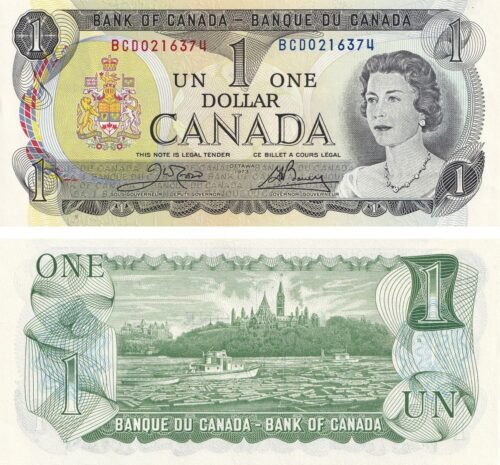
1969–1975 | Multicolour Series
2011–2013 | Frontier Polymer Series

Design & Visual Identity
Authority and precision define the visual structure of Canadian banknotes. Early issues from the Bank of Canada established a formal identity through royal portraiture, while the 1954 series introduced one of the most discussed design anomalies in numismatic history — the so-called “Devil’s Face,” a shadow illusion formed within Queen Elizabeth II’s hair, later removed in revised printings. This moment transformed a standard portrait into a lasting collector’s icon, where engraving nuance became historical narrative.
Contemporary design reaches its peak in the vertical 10 dollars banknote featuring Viola Desmond, a landmark issue recognized with the IBNS Banknote of the Year award. Its vertical orientation redefines composition, placing human rights history at the center of Canadian identity. Alongside it, the 5 dollars note presents Canadarm2, the robotic arm of the International Space Station, anchoring Canada’s role in space exploration within the visual language of currency. Polymer substrates introduce transparent windows, metallic elements, and refined tactile dots for the visually impaired, positioning Canadian banknotes among the most inclusive and technically advanced in the world.
Historical & Cultural Context
Foundations of the Canadian dollar were laid with the 1935 inaugural series, issued in separate English and French versions — a rare linguistic duality that reflects the country’s cultural structure. These early notes established both institutional authority and visual discipline, setting a benchmark for future design evolution.
Subsequent decades reveal a controlled progression rather than abrupt change. From engraved paper notes to pioneering polymer series, Canada has consistently led global standards in banknote production. The transition to polymer not only enhanced durability but redefined security and aesthetics, influencing central banks worldwide and reinforcing Canada’s position as a reference point in modern currency design.
For Collectors
For collectors, Canada offers a highly respected collecting field built on both historical significance and technical innovation. Foundational series such as the 1935 issues and the 1954 “Devil’s Face” notes remain essential, while the modern Frontier Series represents a benchmark in polymer banknote design.
The integration of themes such as space exploration, national identity, and award-winning design creates a layered narrative that continues to attract global collector interest.
Quick Facts
Currency: Canadian Dollar
Issuer: Bank of Canada