Bank of Canada
The Bank of Canada operates as the central monetary authority behind a unified national system, notably recognized for technological leadership and pioneering modern banknote production.
Quick Facts
Institutional Identity
The Bank of Canada serves as the sole issuing authority of the Canadian dollar, established in 1935 to replace fragmented private chartered banknote systems with a single national currency. This transition created a centralized issuance framework that remains a defining institutional feature, ensuring consistency, control and nationwide monetary cohesion.
Historical Evolution
Banknote production is carried out through domestic partners including the Canadian Bank Note Company and BA International, positioning Canada as both a sovereign issuer and a global supplier of secure currency. Through these institutions, Canada extends its technical expertise beyond its borders, contributing to banknote production in multiple international markets.
Design Philosophy
The Bank is globally recognized for innovation in banknote design and security. The 2001–2006 Journey series introduced tactile features for the visually impaired, establishing accessibility as a core institutional principle. This was followed by the Frontier polymer series launched in 2011, making Canada the first G7 country to fully adopt polymer banknotes. A further milestone came in 2018 with the vertically oriented 10-dollar note featuring Viola Desmond, an IBNS Banknote of the Year winner, marking a shift toward socially driven design narratives alongside advanced security features such as large transparent windows and metallic elements.
For collectors
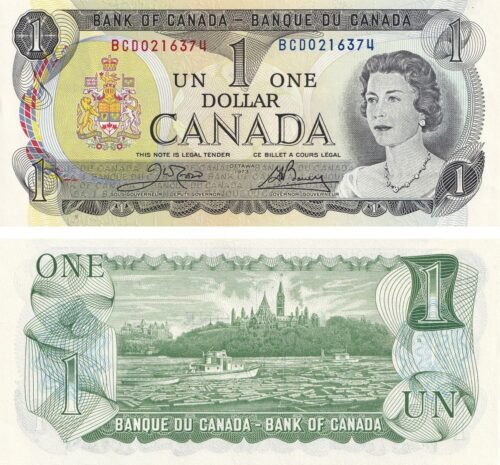
For collectors, banknotes issued by the Bank of Canada offer a technically advanced and highly structured collecting field, where signature pair combinations of Governors and Deputy Governors, polymer innovation and award-winning design milestones create a refined and internationally influential numismatic landscape.