
Kuwait
Kuwait banknotes place the dinar among the Gulf’s most refined issues, defined by elite security printing, liberation-era replacements, and an unusually complete set of fractional notes.
2014 | Modern Dinar Series
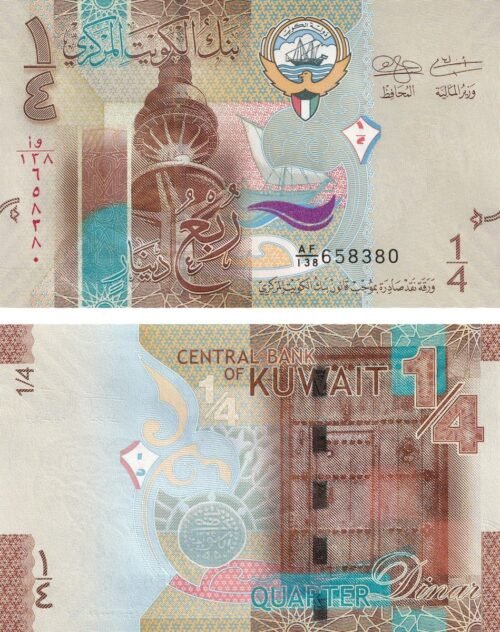
Design & Visual Identity
The modern Kuwaiti dinar series combines sovereign architecture with maritime heritage at a high technical level. Seif Palace and the Kuwait Towers serve as principal architectural anchors, while boom dhows, pearl diving equipment, and port imagery connect the notes to the pre-oil trading economy of the Gulf. The 1/4 and 1/2 dinar notes are especially important because few modern currencies maintain such fractional paper denominations, giving Kuwait a distinctive collector advantage within Middle Eastern numismatics. Across the series, the falcon watermark functions as the key national identifier, reinforced by dense arabesque backgrounds, metallic threads, and advanced optical security devices in the latest 6th series.
A second major collecting layer comes from the break between pre-1990 issues and the post-liberation replacement notes introduced after the Iraqi occupation. Earlier banknotes were withdrawn and replaced through emergency measures, creating a clear distinction between invalidated occupation-era material and the restored sovereign series. This produces a currency field where technical refinement and historical rupture are equally visible.
Historical & Cultural Context
Kuwait’s banknotes are distinguished by the way security, material quality, and national memory are combined on the paper itself. Falcon watermarks, palace imagery, and finely engraved dhow scenes give the notes a controlled, high-value appearance, while the liberation replacement history adds historical depth to an otherwise modern currency system. Maritime scenes function as records of the commercial foundations of Kuwaiti wealth before the oil era reshaped the state.
This combination makes Kuwait unusual within the Gulf, where the notes move from pearl-diving and maritime trade culture to state architecture and high-security optics without losing visual discipline. The continued presence of quarter- and half-dinar paper notes preserves a full denomination structure that remains attractive to type collectors.
For Collectors
For collectors, Kuwait offers a compact but elite field built around Seif Palace, Kuwait Towers, boom dhow and pearl-diving motifs, falcon watermark issues, rare 1/4 and 1/2 dinar notes, and the clear divide between pre-1990 and post-liberation replacement series. The combination of premium print quality, sovereign symbolism, fractional denominations, and invasion-era monetary reset makes Kuwaiti dinar banknotes one of the most specialized and desirable areas in Gulf paper-money collecting.
Quick Facts
Currency: Kuwaiti Dinar
Issuer: Central Bank of Kuwait