Bank of Somaliland
The Bank of Somaliland operates as the central monetary authority of a self-governing territory, issuing a currency circulating outside formal international recognition frameworks.
Quick Facts
Institutional Identity
The Bank of Somaliland functions as the central monetary authority of a self-declared state that has maintained independent currency issuance since 1994. Despite limited international recognition, the Somaliland shilling operates as a fully functional domestic currency, widely used in everyday transactions across local markets and trade.
Historical Evolution
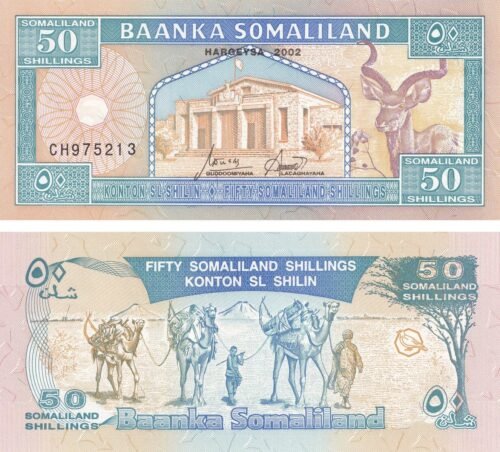
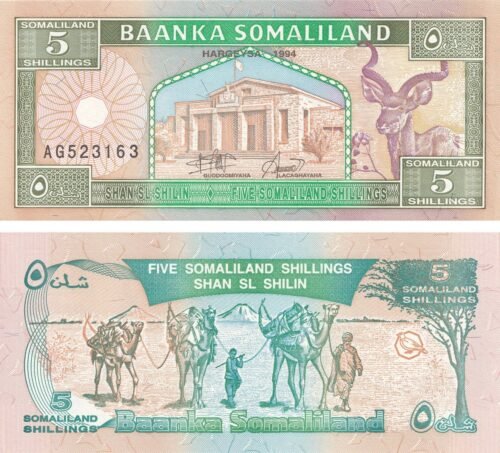
The Somaliland shilling was introduced in 1994, replacing the Somali currency and establishing a distinct monetary system. Early low denominations (5, 10, 20 and 50 shillings) were rapidly withdrawn from practical use due to inflation, leading to a circulation structure dominated by higher values. The 5000 shillings note has become the principal unit in daily transactions, reflecting both price levels and a cash-based economic environment.
Design Philosophy
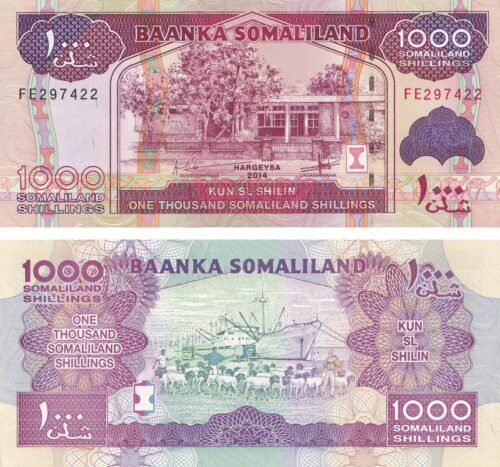
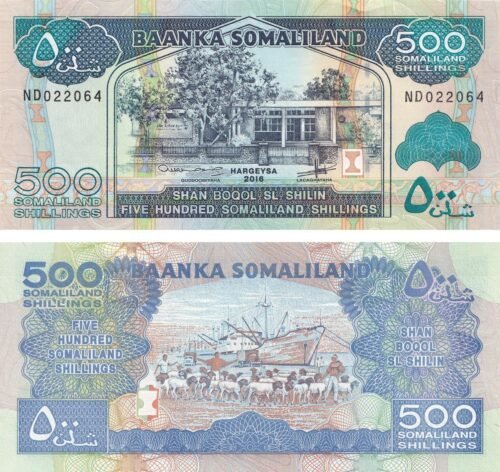
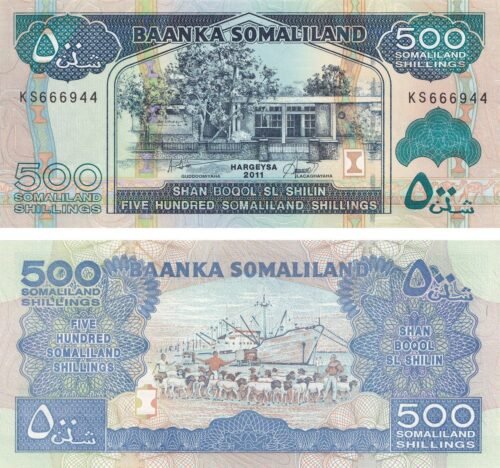
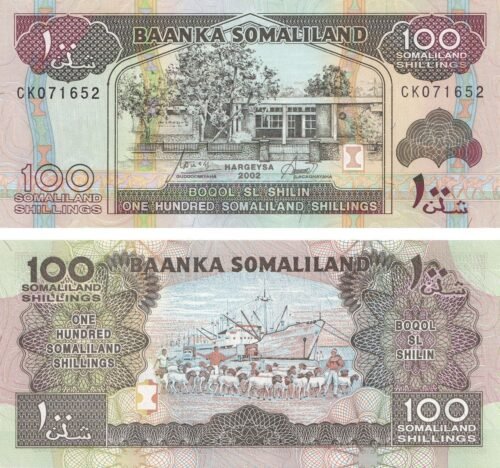
Somaliland banknotes reflect a production system shaped by regional constraints and practical usage. Common design elements include the Port of Berbera, livestock markets and the Somali camel, representing core components of the local economy. The notes are typically printed on standard paper substrates with limited finishing compared to major international issuers, resulting in visible variation in print sharpness and material quality across issues.
For collectors
For collectors, Somaliland shilling banknotes represent a distinct category defined by limited issuance, restricted circulation and clear denomination hierarchy. Early issues from the mid-1990s, particularly in lower denominations, are increasingly difficult to obtain, while higher denominations document the structure of a cash-dominated economy. The separation from Somali currency developments and the absence of integration into global monetary systems create a clearly defined and self-contained collecting field.