
Seychelles
Seychelles banknotes combine famous anomalies with endemic biodiversity, where Coco de Mer, giant tortoises, and rare birds are rendered with refined security printing.
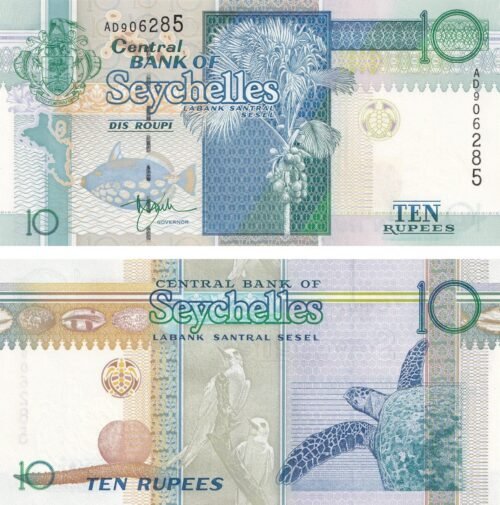
1998–2008 | Without Swordfish Foil Issue
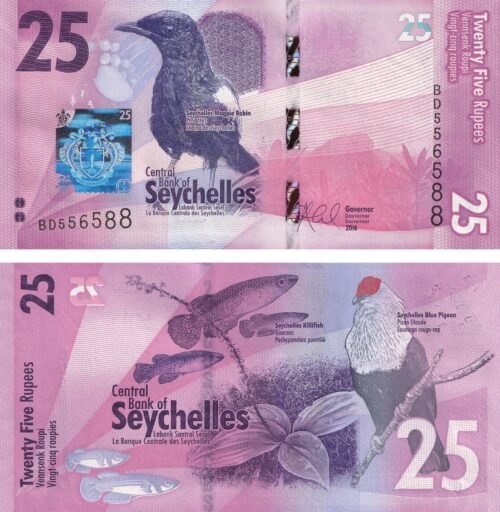
2016–2025 | Birds Rupee Issue
Design & Visual Identity
One of the most recognized features in global numismatics is the 50 Rupees note where the word “SEX” appears subtly within palm fronds near the portrait, forming a well-known printing curiosity rather than a deliberate primary motif.
Modern designs are centered on the Coco de Mer, the world’s largest seed native to Seychelles, integrated into watermark areas and security features as both a symbolic and functional design element.
Fauna is rendered with precise engraving: the Aldabra Giant Tortoise appears with deeply structured shell texture, while the Seychelles Black Parrot is depicted with controlled feather detail and clear contour definition.
Surface structure incorporates advanced ultraviolet security, including multi-color fluorescent patterns, embedded threads, and carefully balanced intaglio engraving across denomination fields.
Historical & Cultural Context
The transition following independence in 1976 replaced colonial portrait imagery with a consistent ecological focus, establishing wildlife and plant life as the central visual identity of the currency.
This shift created a coherent system where biodiversity functions as both cultural representation and design structure.
For Collectors
For collectors, Seychelles stands out for its famous 50 Rupees anomaly, the Coco de Mer motif, detailed endemic wildlife engravings, and advanced UV security features, forming a distinctive and widely recognized island banknote series.
Quick Facts
Currency: Seychellois Rupee
Issuer: Central Bank of Seychelles