
Angolan Kwanza
The Angolan kwanza reflects a nation shaped by resource wealth, disruption and continuous economic recalibration.
Quick Facts
Country: Angola
Code: AOA
Symbol: Kz
System: Decimal (1 Kwanza = 100 Lwei)
Status: In circulation
Issuer: National Bank of Angola
The Story of the Angolan Kwanza
Introduced in 1977 following independence, the Angolan kwanza marked a decisive break from the colonial escudo and the beginning of a sovereign monetary system. Its name, derived from the Kwanza River and the idea of a beginning, reflects a country redefining itself amid political and economic transformation.
Unlike stable currencies built on continuity, the kwanza evolved through repeated disruption. Periods of civil conflict, inflation and structural imbalance led to multiple reforms, including the transition through the Kwanza Reajustado (AOR) before the reintroduction of the modern AOA system in 1999.
A defining modern milestone came with the 2020 banknote series, where Angola introduced advanced polymer and hybrid issues across key denominations. This transition marked a technological leap, aligning the kwanza with the most secure and visually refined currencies in Africa.
Across its evolution, the kwanza has remained a monetary record of volatility, recovery and resource-driven transformation.
Design & Symbolism
Angolan banknotes express identity through a combination of leadership, landscape and economic narrative. Portraits of Agostinho Neto, the nation’s founding president, anchor the series, establishing a clear link between independence and statehood.
Natural and economic symbols reinforce this identity. The Giant Sable Antelope—one of Africa’s rarest animals—appears as a national emblem, while infrastructure such as dams, bridges and oil-related development reflects Angola’s resource-based economy.
The 2020 series introduces a more refined and modern visual system. Polymer substrates allow for transparent elements, sharper detail and enhanced durability, while maintaining strong compositional balance between portraiture and national symbolism.
Security features—including advanced threads, microprinting and hybrid substrates—are fully integrated, positioning the kwanza within the upper tier of modern banknote engineering.
For collectors
For collectors, the Angolan kwanza offers a dynamic and highly stratified collecting field defined by reform, instability and technological renewal.
The sequence from early post-independence issues through inflation-era redesigns to the 2020 polymer series creates a clear collecting arc, where each phase reflects a distinct economic and political reality.
The modern polymer and hybrid banknotes stand out as key acquisition targets, representing Angola’s transition into contemporary banknote production standards.
For collectors, the kwanza is not a static currency but a narrative of transformation—where each issue captures a moment within a broader story of recovery, resource influence and national identity.
From post-independence reforms to modern polymer innovation, the kwanza records Angola’s evolving economic identity.
Explore the Angolan Kwanza Banknotes Collection
-
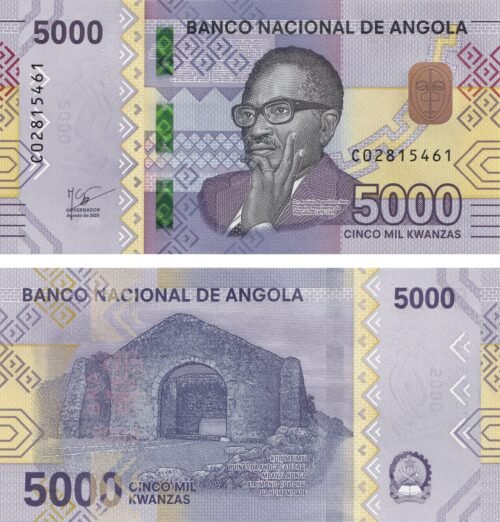
Angola 5000 Kwanzas 2025, P-164, UNC
27,99 € -
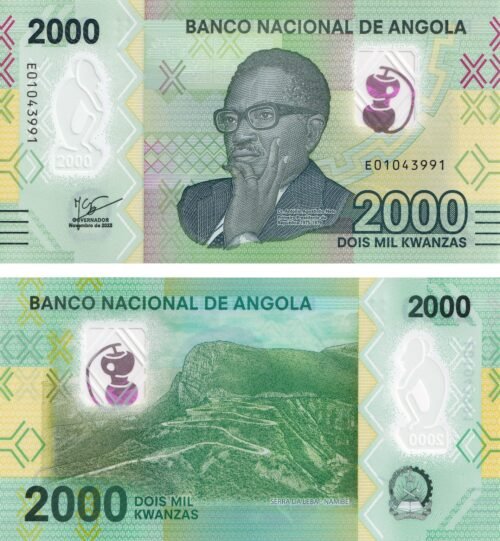
Angola 2000 Kwanzas 2023, P-163, UNC
14,99 € -
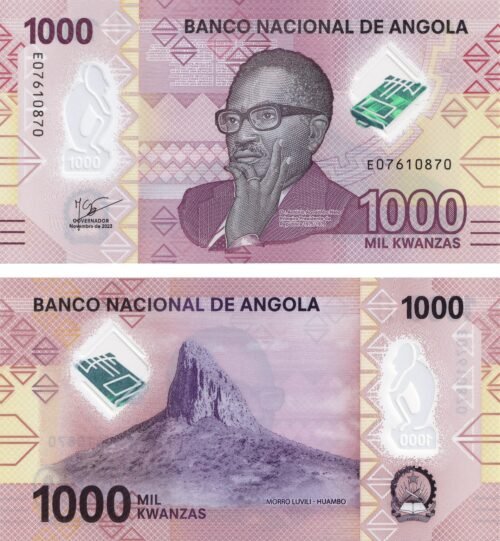
Angola 1000 Kwanzas 2023, P-162, UNC
7,99 € -
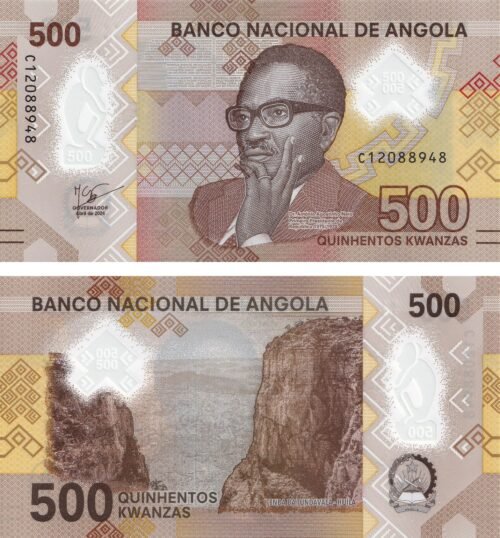
Angola 500 Kwanzas 2024, P-161, UNC
4,99 € -
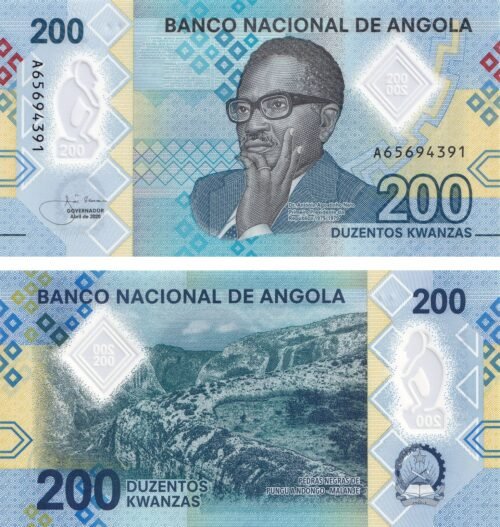
Angola 200 Kwanzas 2020, P-160, UNC
2,99 € -
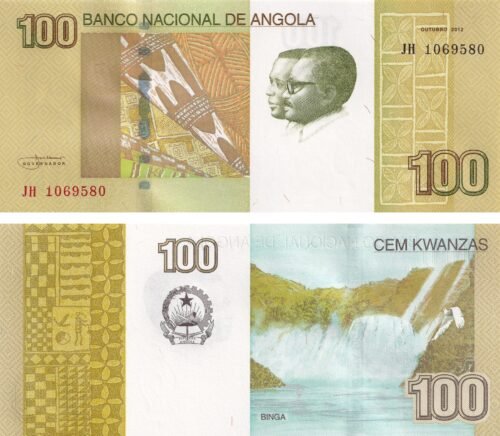
Angola 100 Kwanzas 2012, P-153a, UNC
2,99 € -
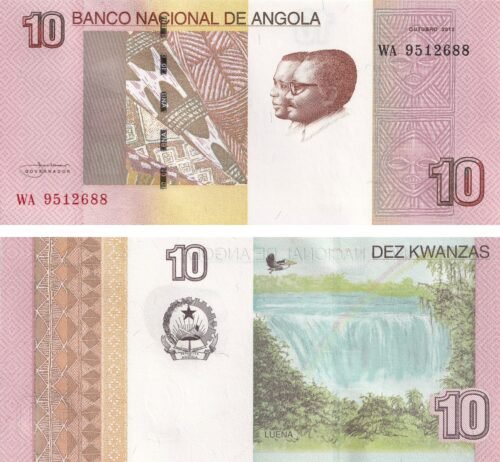
Angola 10 Kwanzas 2012, P-151B, UNC
1,99 € -
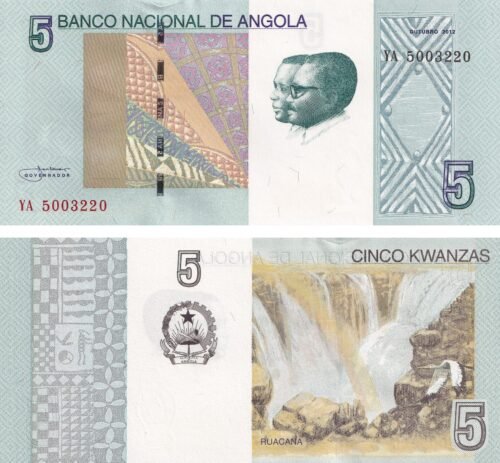
Angola 5 Kwanzas 2012, P-151A, UNC
1,99 €