
Da Afghanistan Bank
The Da Afghanistan Bank (د افغانستان بانک) serves as the central monetary authority overseeing a system shaped by profound political shifts, notably reflected in repeated currency transitions and emergency issues across monarchy, republic and conflict periods.
Quick Facts
Institutional Identity
Da Afghanistan Bank operates as the sole issuer of the afghani and the core institution responsible for monetary stability in Afghanistan. Its role extends beyond conventional central banking, having repeatedly navigated inflationary pressure, institutional disruption and a heavily cash-dependent economy. Unlike many central banks, it relies entirely on foreign security printers—including De La Rue, Giesecke+Devrient and the Polish Security Printing Works—to produce banknotes, reflecting both logistical constraints and the need for internationally trusted production standards.
Historical Evolution
Established in 1939, replacing the earlier Bank-e-Millie Afghan, Da Afghanistan Bank has functioned through monarchy, socialist governance and successive political transformations. A defining monetary reform occurred in 2002 with the introduction of the new afghani (AFN), which replaced the hyperinflated old afghani (AFA) at a ratio of 1,000 to 1. This reform unified a fragmented monetary system in which rival factions had issued parallel banknotes during the 1990s civil war, restoring a single national currency after a decade of monetary disintegration.
Design Philosophy
Banknote design under Da Afghanistan Bank is defined by architectural authority and cultural restraint. Modern issues prominently feature national landmarks such as the Blue Mosque in Mazar-i-Sharif, the Great Mosque of Herat and the Arch of Qala-e-Bost. The visual language avoids contemporary political portraiture, instead relying on geometric ornament, Islamic calligraphy and earth-toned palettes that reflect the country’s landscape. This approach creates a consistent identity where structure, heritage and visual discipline take precedence over stylistic experimentation.
For collectors
For collectors, banknotes issued by Da Afghanistan Bank form a highly significant field within modern numismatics. Particular interest lies in the parallel issues of the 1990s, where competing authorities commissioned distinct printings, as well as in the 2002 currency reform that redefined the afghani. These notes provide a tangible record of monetary fragmentation, recovery and institutional resilience, making them essential for collections focused on wartime currencies, political transition and Central Asian monetary history.
Explore Banknotes Issued by Da Afghanistan Bank
-
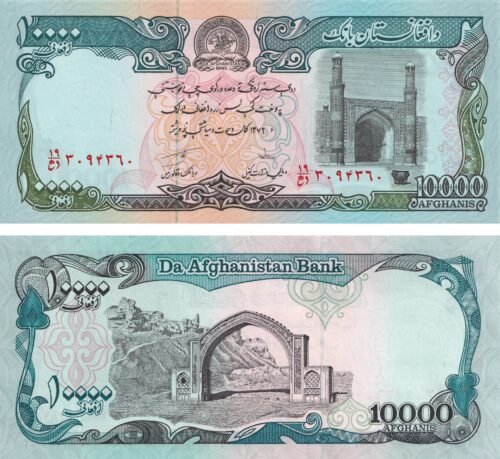
Afghanistan 10000 Afghanis 1993, P-63a, UNC
2,29 € -
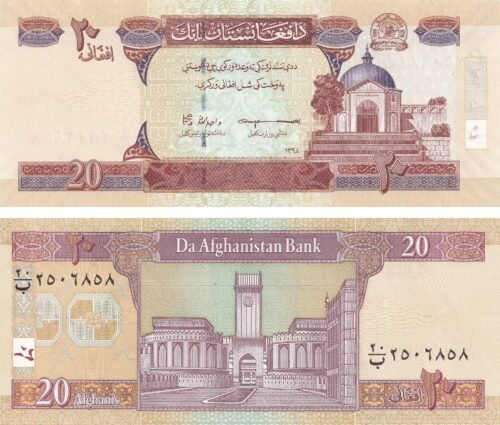
Afghanistan 20 Afghanis 2019, P-68, UNC
2,99 € -
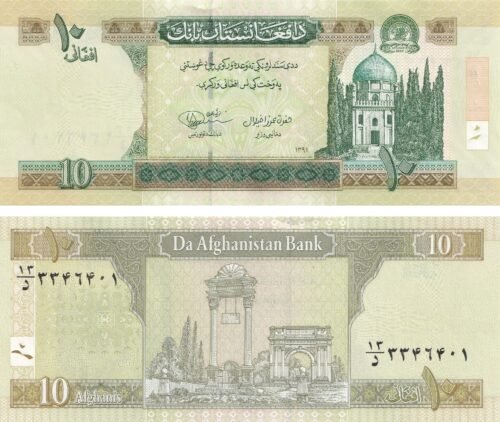
Afghanistan 10 Afghanis 2012, P-67Ab, UNC
1,99 € -
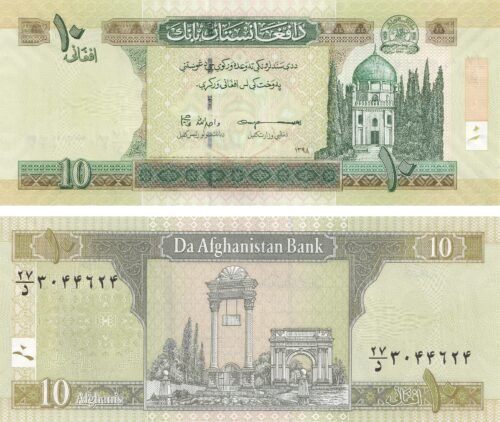
Afghanistan 10 Afghanis 2019, P-67A, UNC
1,99 € -
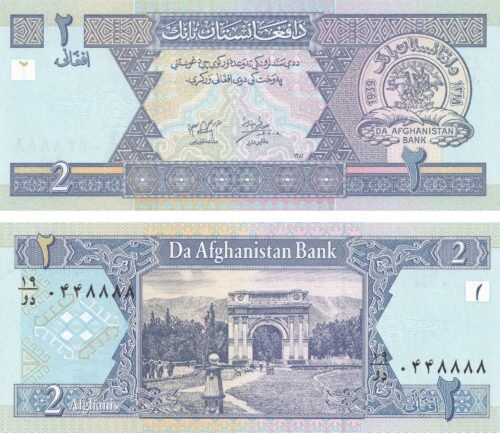
Afghanistan 2 Afghanis 2002, P-65, UNC
1,49 € -
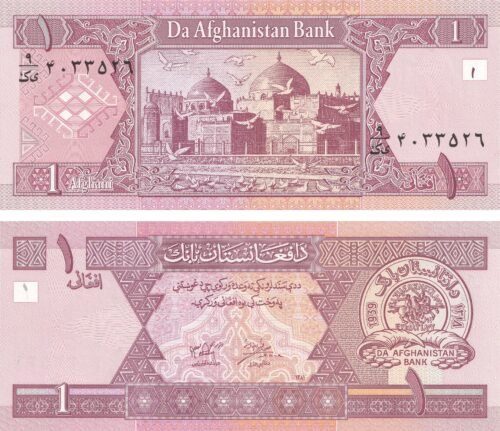
Afghanistan 1 Afghani 2002, P-64, UNC
0,99 € -
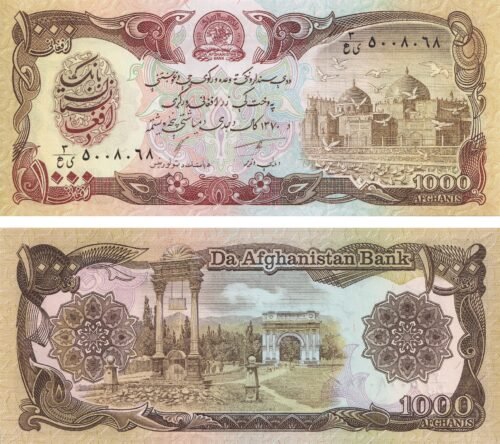
Afghanistan 1000 Afghanis 1991, P-61c, UNC
1,49 € -
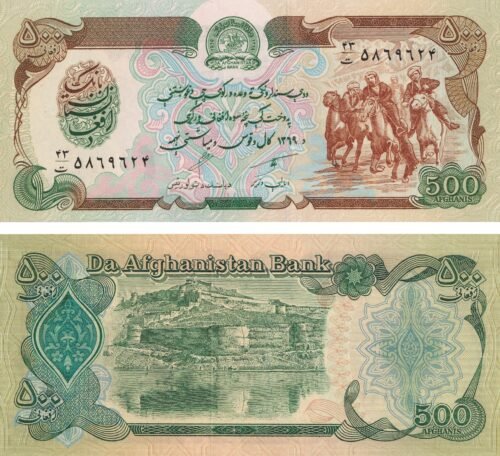
Afghanistan 500 Afghanis 1990, P-60b, UNC
1,49 € -
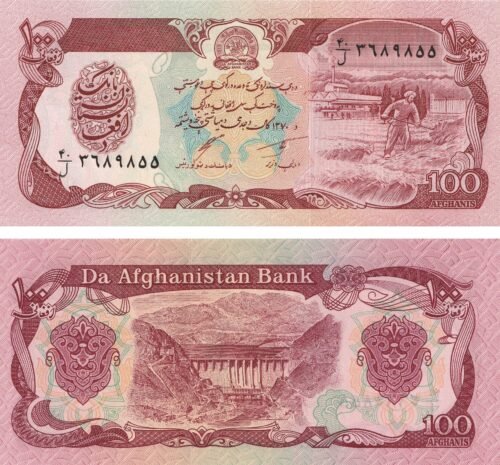
Afghanistan 100 Afghanis 1991, P-58c, UNC
1,49 € -
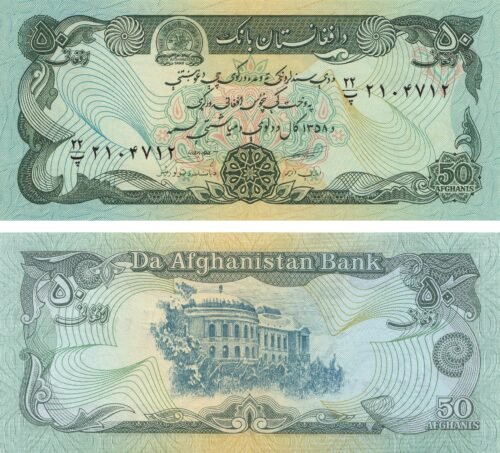
Afghanistan 50 Afghanis 1979, P-57a(2), UNC
1,99 € -
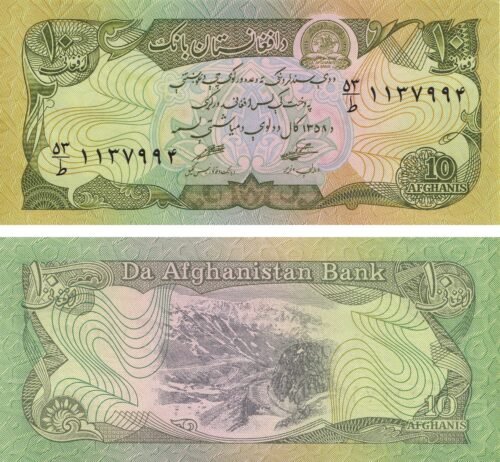
Afghanistan 10 Afghanis 1979, P-55, UNC
2,49 €